
Loading cart...

Canon K35 Zoom: Dreamy Zoom from a Vintage Era
Canon & Cine Visuals Present: Canon K35 Zoom
Cinematic Heritage
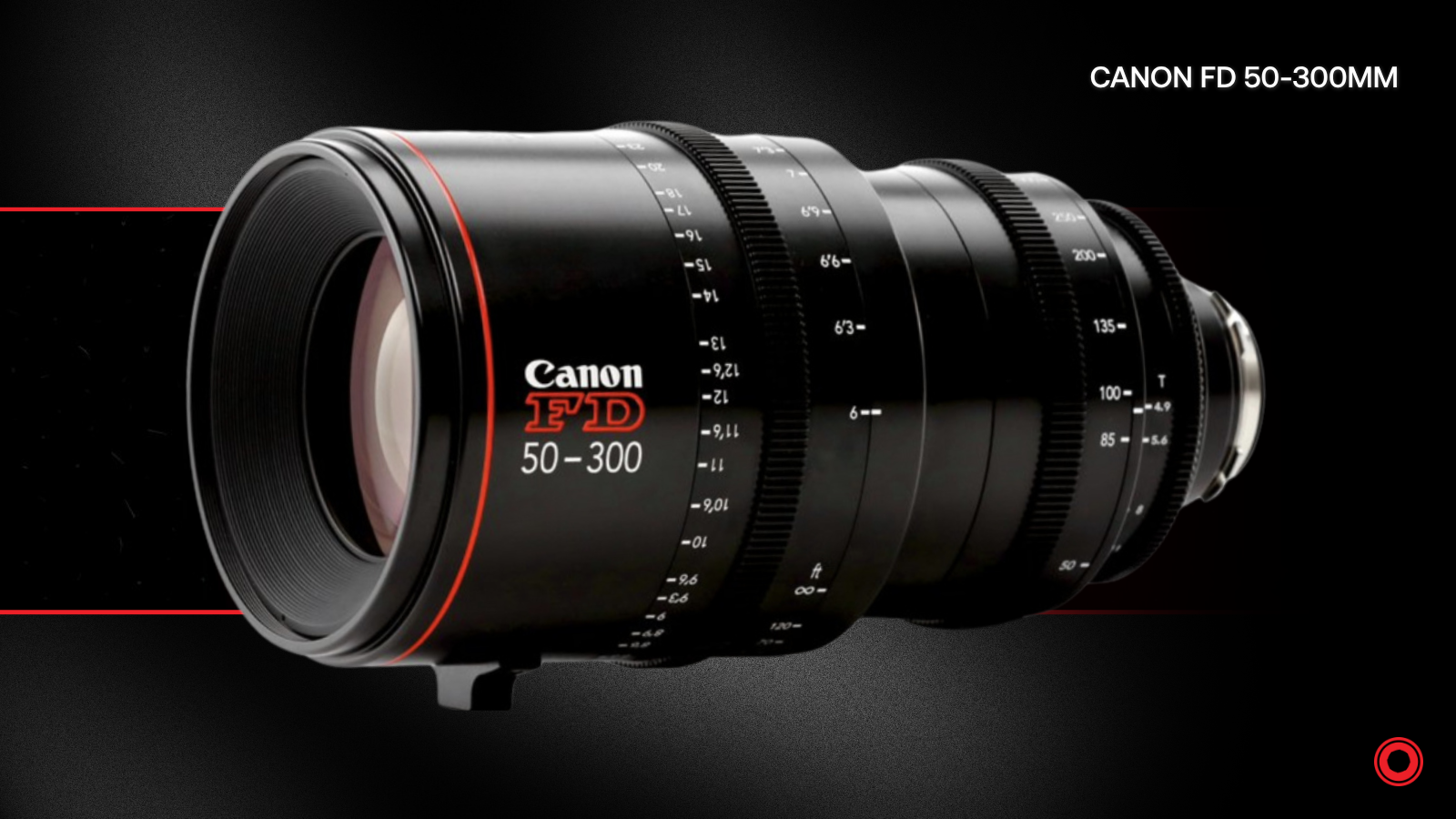
The story begins in Tokyo in the 1930s, when a small optical company that would become Canon Inc. set out to rival the great European manufacturers – specifically the Germany-based Leica. Over the following decades, Canon grew into a powerhouse of precision engineering in its own right, and by the late 1960s it had firmly planted itself in the professional photography world. In 1971, the release of the Canon F-1 camera brought with it the FD mount, a system that would define an entire generation of lenses. Canon poured resources into optical design, mechanical reliability, and coating technology, culminating in a lineup that would eventually exceed one hundred focal lengths. Among their defining traits was the now legendary Super Spectra Coating, which gave images a balanced contrast and a natural, painterly response to light.
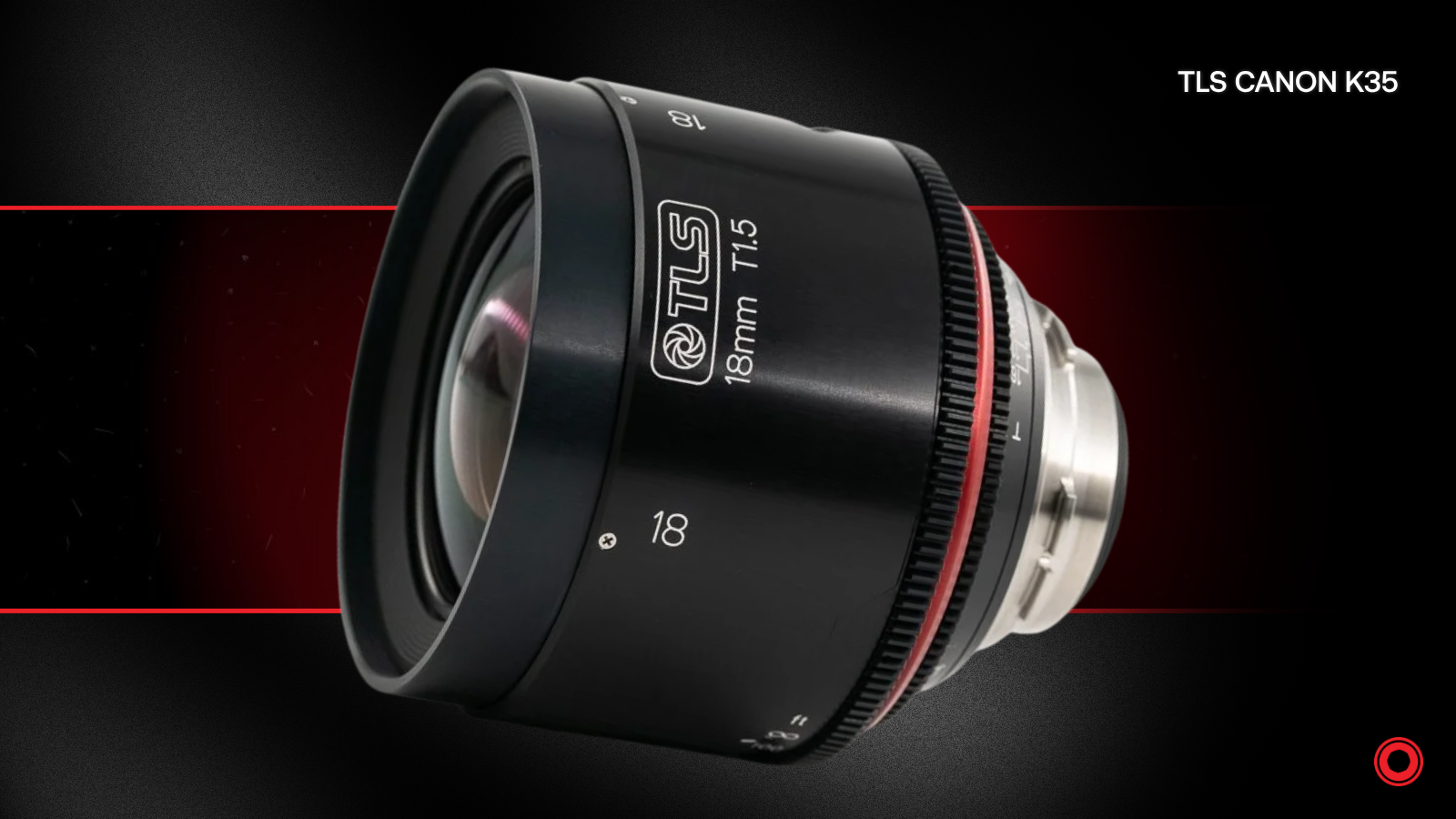
As cinema evolved and competition intensified, particularly with the rise of the famous such as Zeiss Super Speeds, Canon recognized an opportunity. Rather than starting from scratch, they turned to their already exceptional FD glass. The result was the Canon K35 series, a set of motion picture lenses that retained the optical DNA of the FD line while introducing entirely new housings and refinements tailored for filmmaking. These were not simple adaptations. They were re-engineered tools built to meet the demands of cinema, with smoother mechanics, longer focus throws, and optical adjustments suited for motion picture capture.
Then came the bold step. Canon did not stop at primes. In an era when zoom lenses were often dismissed as optically inferior, they developed the Canon K35 25-120mm T2.8 Macro Zoom. This was not meant to replace the primes but to stand alongside them. It was designed to match their rendering while offering flexibility that a set of fixed focal lengths simply could not. The original housing represents this philosophy in its purest form. It is a direct artifact of Canon’s engineering at the time, built with purpose and confidence. When paired with the original K35 primes, the zoom completes the set in a way that feels intentional. It extends the visual language without breaking it, offering cinematographers a seamless transition between fixed and variable focal lengths while maintaining a unified look.
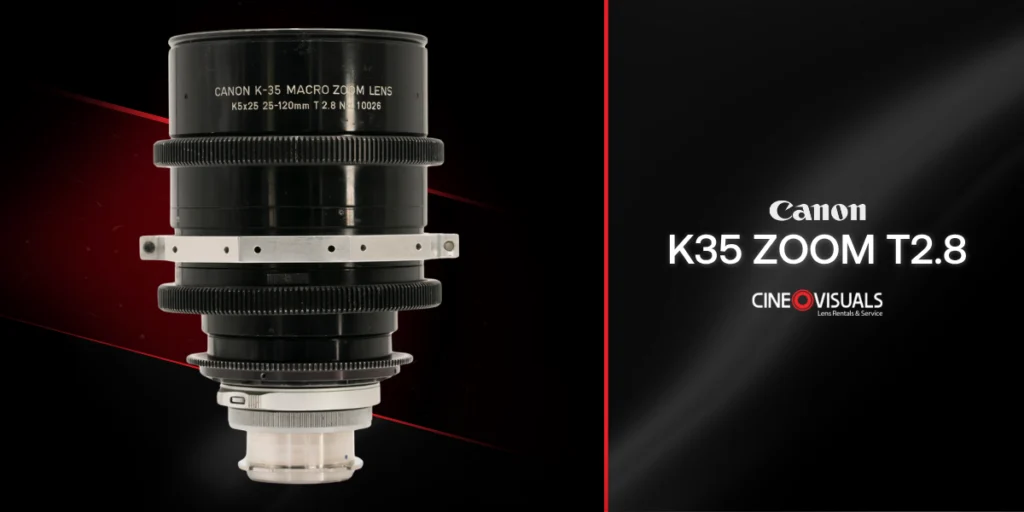
Image Fidelity and Focus
There is a certain honesty to the way this lens renders an image. It does not chase perfection in the modern sense. Instead, it embraces balance. At T2.8, the lens is impressively sharp for its era, yet that sharpness never feels clinical. There is a softness woven into the image, not as a flaw but as a character. Highlights roll off gently, avoiding the harsh clipping that often plagues modern optics, while shadows retain depth without becoming overly dense. The artistry of the lens lies in its restraint. Contrast is present but not aggressive. Colors lean warm, especially in skin tones, which appear natural and inviting. This warmth is subtle, never exaggerated, and it contributes to an overall sense of cohesion in the frame. Focus transitions are where the lens truly shines. The falloff from sharpness into blur is gradual and elegant, creating a dimensional separation that feels organic. Subjects are not cut out from their backgrounds. They emerge from them. Whether at 25mm or 120mm, the image retains the same emotional quality. This consistency is what allows it to sit comfortably beside the K35 primes. It does not feel like a compromise. It feels like an extension of the same artistic vision, capable of capturing everything from intimate close ups to broader environmental compositions without losing its voice.
Handling and Adaptability
Physically, the lens reflects the era in which it was built. It is large, substantial, and undeniably mechanical. Weighing over 11 lbs and stretching roughly 9 inches in length, it commands presence on any camera. This is not a lightweight run and gun lens. It is a deliberate piece of equipment designed for controlled environments and thoughtful operation. Yet within that heft lies a sense of precision. The original Canon housing was engineered with cinema in mind, offering smooth focus and zoom movements that remain reliable decades later. The macro functionality is particularly impressive, giving the lens a much more impressive close focus than one might expect from a zoom of this range. This opens creative possibilities without the need for additional accessories, a feature that was groundbreaking at the time and remains valuable today. There are, of course, limitations. The size and weight require proper support, and the ergonomics reflect an earlier standard that may feel less refined compared to modern rehousings. But these are tradeoffs rather than flaws. In return, the lens offers durability, consistency, and a tactile experience that many cinematographers find deeply satisfying. It feels like a tool built to last, because it was.
Image Circle
To understand the image circle is to understand what a lens is truly designed to see. The image circle is the diameter of the projected image that the lens casts onto the film plane or sensor. By the mid-20th century, the S35 format became the standard, using a vertically oriented frame that captured a smaller portion of the image compared to still photography. As digital cinema evolved, sensors began to expand, with large format cameras pushing beyond the boundaries of traditional S35.
The Canon K35 Zoom carries its heritage in its name. The “35” is not just a label. It reflects its design purpose. This lens was built from FD optical roots but engineered specifically for 35mm motion picture use. Its diagonal image circle sits at 32mm, well above the minimum 31.1mm coverage necessary for S35 coverage.
Flare and Bokeh
Light is where this lens reveals its personality. The Super Spectra Coating that defines Canon’s FD and K35 lineage does not eliminate flare. It shapes it. When bright sources enter the frame, the lens responds with a palette of warm tones. Amber and gold often lead the way, accompanied by gentle hints of magenta and violet. These flares do not overpower the image. They drift through it, adding texture and emotion like brushstrokes on a canvas. Bokeh carries that same sense of artistry. The multi blade iris maintains a rounded shape throughout the aperture range, producing highlights that feel soft and cohesive. Out of focus areas dissolve into creamy textures, with a subtle structure that gives depth without distraction. There is a slight swirl at times, a natural byproduct of the optical design, which adds movement and life to the background. What ties it all together is the relationship between flare, bokeh, and focus falloff. They work in harmony. The flares add atmosphere, the bokeh provides separation, and the focus transition guides the eye. The result is an image that feels alive, rich with nuance, and unmistakably cinematic.
This lens is available for rent at Cine Visuals. For inquiries or testing appointments email info@cinevisuals.com or call (323) 244-2552.