

Loading cart...

Canon FD 50-300mm: FF Zoom for K35 Enthusiasts
GL Optics, Canon, & Cine Visuals Present: GL Optics Canon FD 50-300mm
Cinematic Heritage
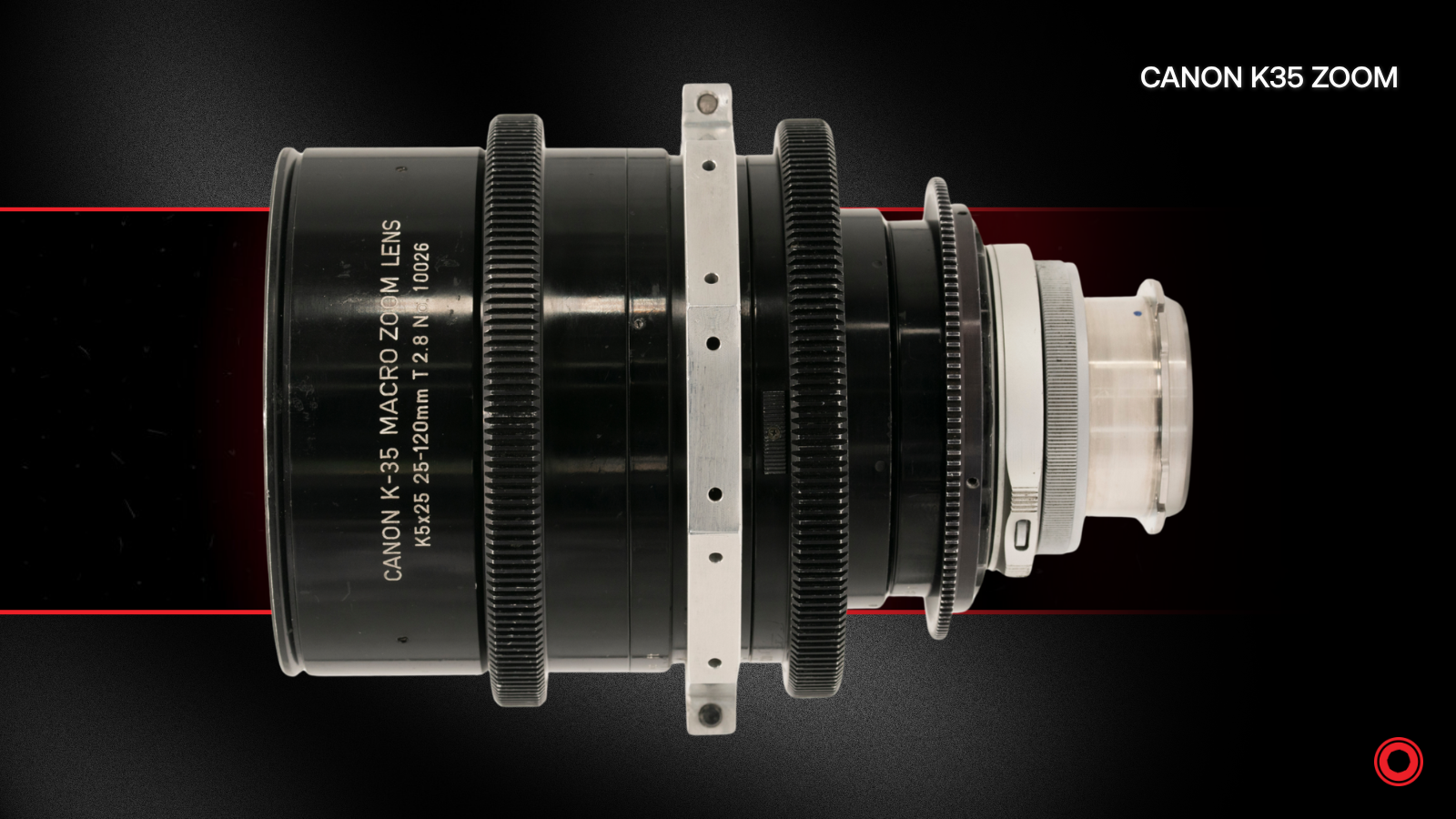
In the 1930s, a small group of optical geniuses in Japan set a goal to build world-class cameras and lenses that could rival the dominant German manufacturers of the time. What started as a small optical laboratory in Tokyo eventually grew into one of the most influential imaging companies in history, shaping everything from consumer photography to broadcast television and modern digital cinema. By the late 1960s and early 1970s, Canon had firmly established itself in the professional photography market. The company launched the professional Canon F‑1 in 1971, a rugged camera designed to compete directly with the legendary Nikon F system. Alongside the F-1 came an entirely new family of lenses built around Canon’s new proprietary FD mount, for which these lenses would acquire their namesake. These Canon FD lenses would go on to become one of the most extensive and beloved photographic lens families ever produced. Canon invested heavily in both optical engineering and mechanical precision when designing the FD system. At launch, the mount debuted with a lineup of 13 lenses, but over the next decade that number grew dramatically. Eventually more than one hundred FD focal lengths were produced, ranging from ultra-wide perspectives to long telephoto designs. Many of these lenses carried Canon’s distinctive Super Spectra Coating, a multilayer optical treatment designed to reduce flare, increase contrast, and improve color reproduction. This coating would become one of the defining visual characteristics of the FD look. The legendary Canon K35 lenses were a motion picture adaptation of the same glass.
Flash forward to the 21st century – the age of digital cinema. Modern lenses have become technically flawless on an optical level. While impressive from an engineering standpoint, this level of perfection is often sterile on modern digital sensors. Filmmakers began searching for lenses with personality, texture, and emotional warmth. Vintage optics suddenly found themselves back in demand. Amongst them, Canon K35 lenses. However, vintage lenses came with a major drawback in their clunky outdated mechanical housing. GL Optics built its reputation on a simple but powerful idea to preserve the optical character of vintage lenses while rebuilding their mechanics to meet modern cinema standards. Many classic lenses, especially stills lenses, were never designed for the rigorous demands of film production. Focus throws were short, aperture rings clicked, and housings lacked the durability required for professional sets. Rehousing changes all of that. The original glass remains intact, but the mechanical body is replaced with a modern cinema housing complete with long focus rotation, standardized gears, and robust construction.

Canon FD lenses proved to be perfect candidates for this transformation. Their optical quality, color rendering, and coating characteristics already aligned beautifully with the cinematic aesthetic that filmmakers loved about the K35 lenses. Rehousing these optics allowed cinematographers to tap into the same visual heritage while gaining the usability of modern cinema lenses. And they cover Full Frame, an important aspect of modern filmmaking with the rising popularity of large format cinema. Among the many FD lenses available, one stood out as particularly exciting for GL Optics and filmmakers – the Canon FD 50-300mm zoom. Originally introduced in the early 1980s, this lens was a technological powerhouse for its time. Covering a wide focal range from normal to long telephoto, it offered remarkable versatility while maintaining strong optical performance across the zoom range. By rehousing this lens, GL Optics transformed a classic still photography zoom into a full-fledged cinema tool. The resulting GL Optics Canon FD 50-300mm combines vintage Canon glass with a robust cinema housing designed for professional filmmaking. Just as importantly, it integrates seamlessly with K35 and rehoused FD prime lenses, creating a unified visual language across a project. For cinematographers seeking the warmth and character of Canon’s vintage optics, this zoom lens becomes a powerful companion.
Image Fidelity & Focus
The visual character of the GL Optics Canon FD 50-300mm begins with the glass itself. Canon’s FD lenses were renowned for their image quality when they were first released, and even decades later their optical signature continues to stand out. Much of this character comes from Canon’s Super Spectra Coating system, a multi-layer coating technology developed to improve contrast and reduce flare while preserving natural color rendition. At the time these coatings were introduced, they represented a major advancement in lens design. Images produced by FD lenses were known for being impressively sharp even wide open, yet they retained a softness that felt organic and natural. This balance between resolution and gentleness became one of the defining traits of the FD look. Modern optics approach coatings quite differently. Today’s lenses are often optimized with the help of powerful computer simulations and designed to meet extremely demanding technical specifications. They deliver extraordinary clarity and precision, but sometimes that perfection can feel harsh when paired with high-resolution digital sensors. These precision optics are incredible for scientific and medical advancement, but pull the soul out of the image for filmmaking. Vintage lenses offer something different. Their coatings interact with light in a way that produces subtle imperfections such as tiny flares, gentle blooming, and softer highlight transitions that many filmmakers find deeply appealing. Famously, the Super Spectra Coatings found on FD lenses play a major role in this aesthetic. Rather than eliminating flare entirely, they allow it to appear in a controlled and artistic manner. Contrast remains strong, but highlights roll off smoothly instead of clipping harshly. The result is an image that feels both detailed and emotionally warm. The GL Optics Canon FD 50-300mm inherits this character directly from its original optics. Even though the housing has been completely redesigned for cinema use, the glass itself remains unchanged. This means the lens preserves the same visual DNA that connects it to the broader Canon FD family and, by extension, to the Canon K35 lenses.
One of the most striking aspects of this lens is the way it handles focus transitions. The falloff from sharp focus into softness is gradual and elegant, never abrupt or distracting. Subjects remain clearly defined while the background gently melts away. This subtle transition contributes to a sense of dimensionality in the image, allowing cinematographers to guide the viewer’s attention without resorting to extreme depth of field effects. Skin tones rendered through this lens have a particularly pleasing quality. They appear warm without being overly saturated, and the gentle contrast produced by the coatings gives faces a natural, flattering appearance. Highlights transition smoothly into midtones, creating an almost painterly softness that many cinematographers associate with classic film imagery.
Handling & Adaptability
One of the biggest challenges with adapting vintage stills lenses for cinema is that still photography mechanics simply were not built for the demands of film production. Focus rings are often short and stiff, aperture rings click between stops, and the overall construction may not hold up to the rigors of a professional set. One reason why even in the ‘70s Canon themselves adapted their FD lenses to the K35s with the same optics but completely different housings. GL Optics addresses these challenges by rebuilding the lens from the ground up. The original glass elements are carefully removed and placed into a completely new housing designed specifically for cinema workflows. The resulting lens feels solid, precise, and ready for the fast pace of production.
With a focus throw of roughly 330º, the lens allows for extremely precise focus pulling. This long rotation provides the kind of fine control that camera assistants rely on when working with shallow depth of field or complex blocking. The housing also includes industry-standard 0.8-mod gearing for focus, iris, and zoom control. This ensures compatibility with follow focus systems and wireless lens control motors. For camera assistants, this standardization makes the lens immediately familiar and easy to integrate into existing rigs. Durability is another major advantage. The rehoused body is built from high-quality metal components designed to withstand the demands of professional filmmaking. Whether mounted on a studio camera, a handheld rig, or a stabilized platform, the lens remains stable and reliable. For operators, the zoom range itself offers tremendous flexibility. Covering focal lengths from 50mm all the way to 300mm, the lens can move from a natural perspective to an extreme telephoto without changing glass. This versatility makes it particularly valuable in situations where lens swaps are impractical or time-consuming.
Image Circle
The Canon FD lenses were built for 35mm still photography, a format that exposes film horizontally. As opposed to S35mm which is exposed vertically at 4-perfs, this format exposes a much larger image area of 8-perfs. VistaVision, which has gained a rising popularity in the modern day, is a motion picture adaptation of horizontally exposed 35mm still photography and in turn the inspiration for modern Full-Frame digital sensors. Sensors found in cameras like the ARRI Alexa LF and Sony Venice closely match the dimensions of 35mm still photography. Since FD lenses were originally designed for that format, they naturally cover these modern sensors without difficulty which brings the vintage look to modern Full-Frame demands. Specifically, the GL Optics Canon FD 50-300mm has an image circle of 43.27mm which is more than enough to cover Full-Frame.
Flare & Bokeh
Perhaps the most magical aspects of the GL Optics Canon FD 50-300mm appear when light interacts with the lens. The Super Spectra Coatings that define Canon’s FD optics create a distinctive interplay between contrast and flare. Rather than producing harsh streaks or washed-out images, the lens generates subtle and expressive flares that enhance the mood of a scene. When light sources enter the frame, delicate hues begin to appear. Amber tones shimmer across the image, occasionally accompanied by soft hints of gold, violet, or magenta. These colors drift through the frame like brushstrokes, adding texture without overwhelming the composition.
Bokeh is equally captivating. The rehoused lens features a 15 blade iris designed to produce smooth, circular bokeh. Even when stopped down, the bokeh maintain a pleasing roundness that avoids the harsh polygonal shapes found in some modern lenses. Backgrounds dissolve into creamy, painterly textures while the subject remains clearly defined. Points of light become luminous orbs, gently bending around the edges in a subtle swirl that gives the image depth and movement. Combined with the warm color rendition and gentle focus falloff, this bokeh contributes to scenes feeling soft, detailed, and romantic yet grounded in reality.
This lens is available for rent at Cine Visuals. For inquiries or testing appointments email info@cinevisuals.com or call (323) 244-2552.