Image Fidelity & Focus
At normal working distances, the image is impressively sharp across the frame for such a specialized optic. Edge-to-edge performance is consistent, particularly around the middle of the zoom range (near 24mm), where distortion is also at its lowest. At extreme 2.1:1 magnification, slight edge softness and mild contrast falloff can appear—typical of probe-style optics pushed to their limits—but the center remains detailed and clean.
Color rendition is generally described as neutral-to-slightly-warm. Skin tones feel natural rather than clinical, which helps when the probe is used in stylized narrative inserts. Shadows hold detail with moderate contrast, avoiding crushed blacks. Mid-tones feel smooth and malleable in grading, and highlights roll off gently without harsh clipping.
One of the lens’s strongest technical achievements is its minimal focus breathing and parfocal design. Focus remains consistent through the zoom range, allowing cinematographers to reframe during a macro push without losing critical sharpness. In motion-control environments or slider shots where depth is razor thin, this reliability is invaluable.
The constant T8 aperture is slower than many traditional cine zooms, but probe lenses are typically used in controlled lighting setups. The tradeoff allows for deeper focus and greater environmental context—one of the visual hallmarks of probe cinematography.
Handling & Adaptability
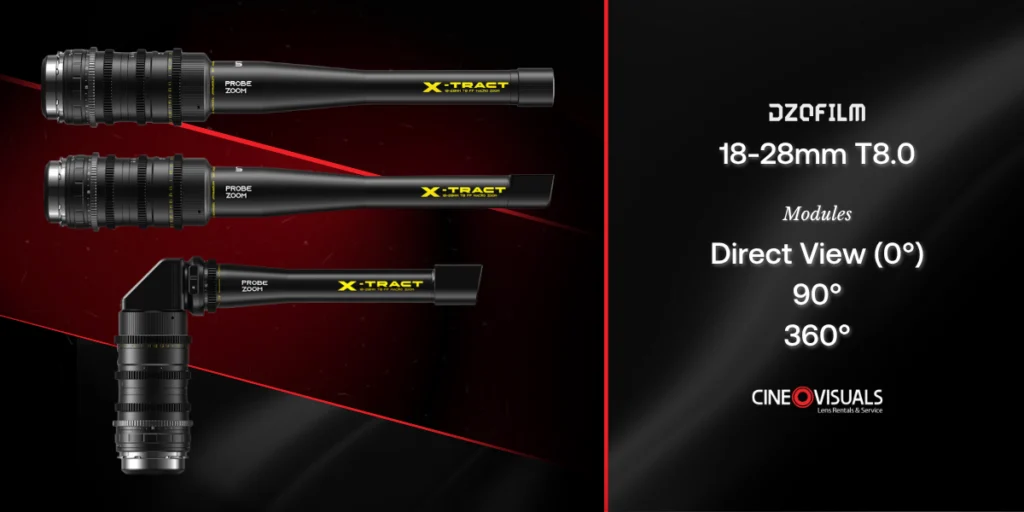
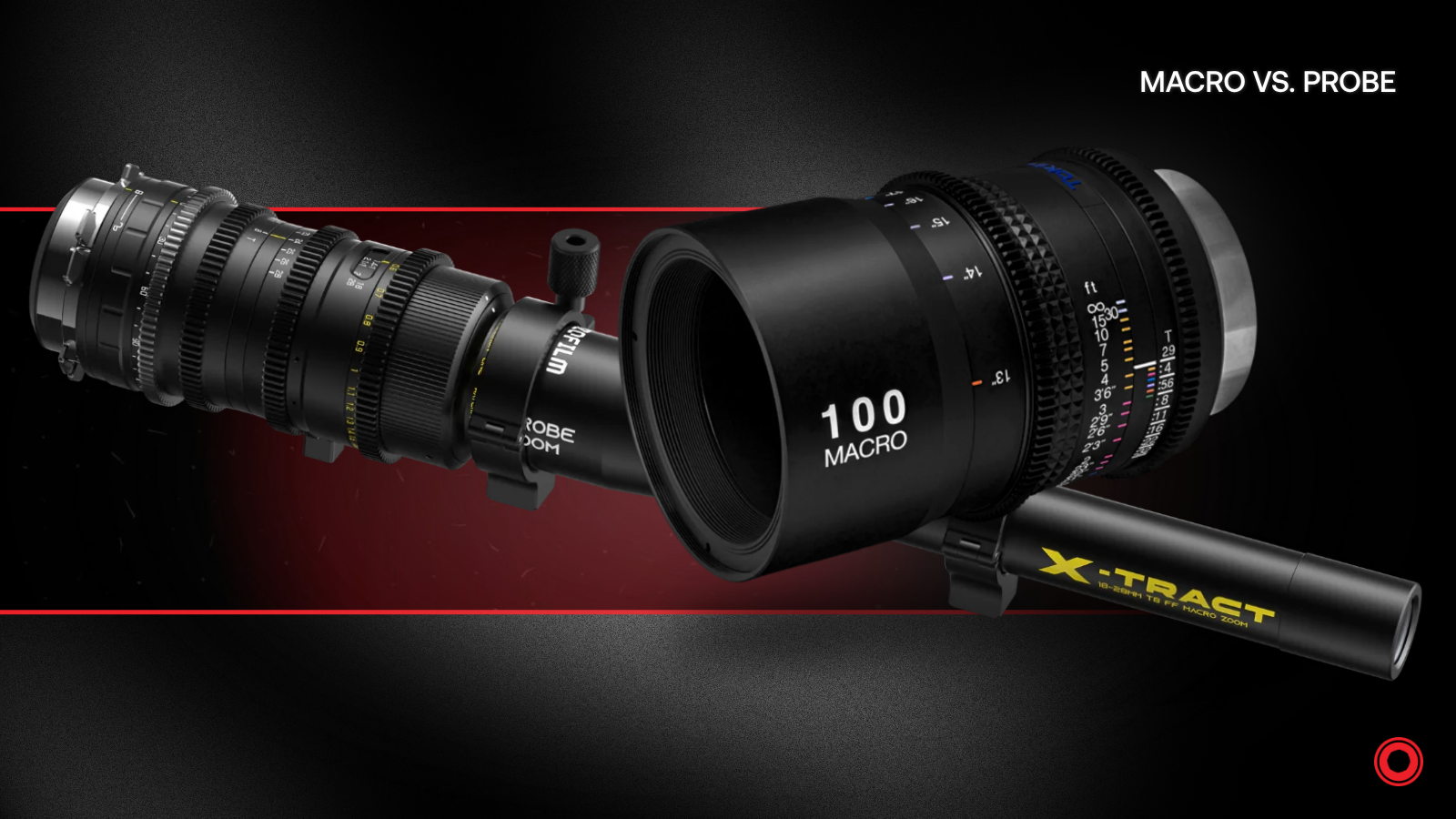
The X-Tract is unapologetically purpose-built. Its long, tubular front section measures roughly 415mm in length (0° version) and weighs approximately 2.43 lbs, depending on configuration. Despite the extended barrel, the rear housing is compact and production-friendly. Though compact, the lenses have a 300º focus throw with standardized 0.8 MOD gear rings for focus, zoom, and iris. Knowing the complicated and delicate positions that macro-cinematography often requires, the housing has aerospace-grade aluminum material with the front glass element having hydrophobic front coatings that allows the lens to be completely submerged in water safely.
The extremely narrow front diameter (approximately 29–30mm on the straight probe) allows it to enter tight spaces – between food elements, miniature builds, mechanical parts, or environmental textures.
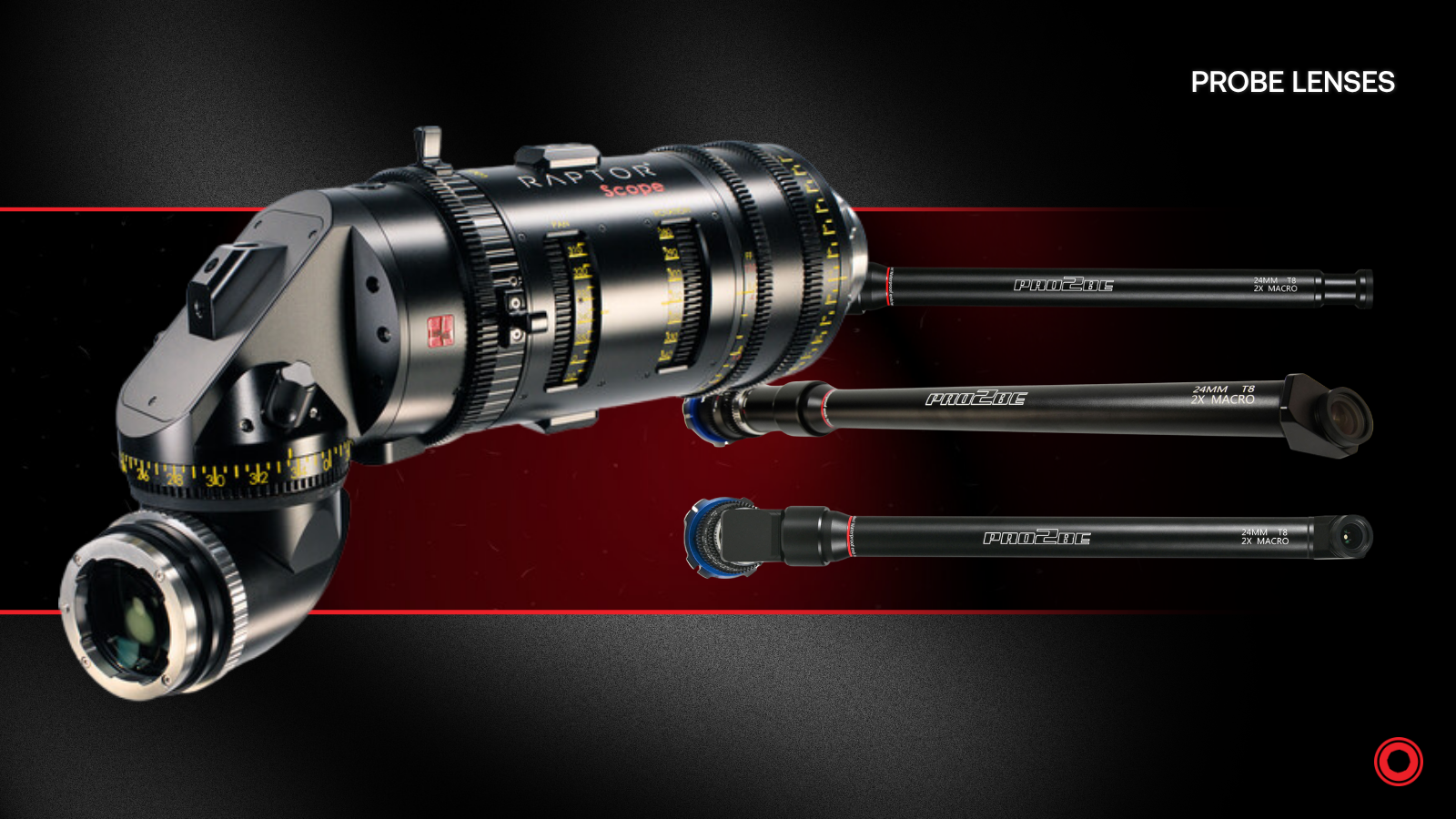
DZO also offers angled and periscope variants (0°, 90°, and 360° rotating configurations), expanding creative positioning options. These attachments allow for top-down macro, worm’s-eye perspectives, and side-entry framing without physically tilting the camera body which is particularly useful on large builds or when the camera is mounted to a robotic arm. It behaves less like a fragile specialty lens and more like a robust cinema zoom adapted to macro scale.
Image Circle
The X-Tract 18–28mm covers a 43.2mm image circle, fully covering Full-Frame/VistaVision sensors. This allows it to cover the ARRI LF and Mini LF sensors, Sony Venice, RED Raptor VV, and all S35mm image planes.
Full-Frame coverage is particularly important in probe cinematography because the wide-angle macro perspective benefits from the spatial depth that larger sensors provide. Instead of isolating a subject with telephoto compression, the X-Tract places viewers inside the environment – foreground texture looming large while the background retains dimensionality.
Flare & Bokeh
Probe lenses traditionally emphasize depth and environment over shallow depth-of-field, and the X-Tract follows that philosophy. Flare behavior is controlled and modern. Coatings suppress excessive veiling flare, keeping contrast stable. When pointed toward strong light sources, flares tend to be neutral with a subtle bloom. They often adopt the color temperature of the light source rather than imposing a strong blue or amber tint.
Bokeh, shaped by a 10-blade iris, remains circular when stopped down. With the wide focal lengths and macro proximity, out-of-focus areas tend to feel environmental rather than creamy. Background highlights are smooth and unobtrusive, rarely distracting from the subject.
These lenses are available for rent at Cine Visuals. For inquiries or testing appointments email info@cinevisuals.com or call (323) 244-2552.