


Loading cart...

ARRI Macro Primes: Optical Excellence in Macro Cinema
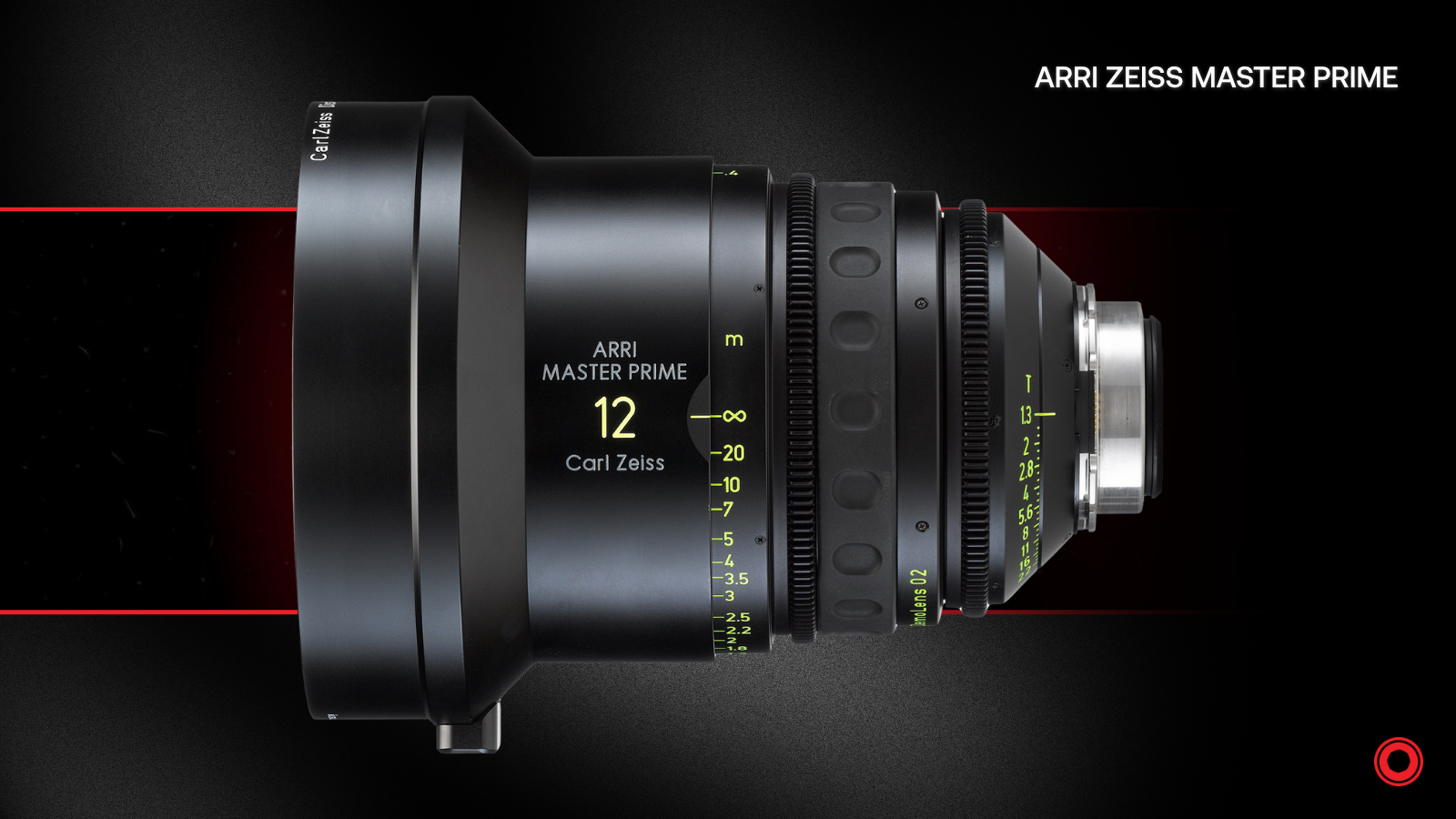
ARRI, Zeiss, & Cine Visuals Present: ARRI Macro Primes
Cinematic Heritage
Long before macro cinematography became a stylistic choice, it was a technical necessity. The desire to see what the human eye could not – the texture of skin, the grain of wood, the minute imperfections in metal – has always existed in visual storytelling. Early macro photography emerged from scientific imaging, where lenses were designed to reproduce subjects at life-size magnification or greater. Translating that into motion pictures, however, presented an entirely different challenge. Cinema lenses needed not only to magnify, but to do so while maintaining focus consistency, exposure reliability, and mechanical precision under the pressures of production. Macro lenses work by extending the optical path and carefully controlling the distance between elements, allowing subjects to be brought into sharp focus at extremely close distances to the image plane. But as that distance shrinks, light transmission changes, focus breathing increases, and optical aberrations become harder to control. Designing a macro lens for cinema is not simply about getting closer but getting closer without destroying the image.
Back in 1917, in Munich, Germany, August Arnold and Robert Richter founded ARRI in the height of World War I. From its earliest days, ARRI distinguished itself not through optics, but through engineering. Cameras had to function flawlessly in the real world – on location, under pressure, and in motion. The Arriflex 35, introduced in 1937, revolutionized cinematography with its reflex viewing system, allowing operators to see directly through the taking lens. That philosophy of building tools that serve the cinematographer would carry forward into every product ARRI would later develop, including macro lenses.
Rewinding even further, in 1846 in Jena, Germany, Carl Zeiss had already begun laying the foundation for modern optics. By partnering with Ernst Abbe and Otto Schott, Zeiss transformed lens design from an art into a science. Optical performance could now be calculated, refined, and perfected before manufacturing even began. Aberrations were no longer mysteries but rather variables to be controlled. This scientific rigor would become the hallmark of Zeiss glass, defining its clarity, contrast, and consistency for generations.

The collaboration between ARRI and Zeiss brought these two philosophies together. Zeiss would design the optical formulas to capture light while ARRI engineered the housings that made those optics usable in the demanding environment of filmmaking. Over time, this partnership would yield some of the most respected lenses in cinema history. But the Macro Primes occupy a unique place within that lineage.
These lenses were built to solve a specific problem: how to bring true macro capability into a cinema workflow without compromise. Cinematographers needed lenses that could move seamlessly from standard framing into extreme close-ups without introducing instability, inconsistency, or fragility. The result was the ARRI Zeiss Macro Primes, or colloquially often simplified to just the ARRI Macro primes.
Image Fidelity & Focus
At the heart of the Macro Primes lies Zeiss’ optical craftsmanship, pushed into a space where precision becomes unforgiving. Macro imaging exposes everything. At close distances, even the smallest aberration becomes visible, contrast can collapse, and depth-of-field becomes razor thin. Zeiss approached these challenges with the same disciplined methodology that has defined its optics for over a century. The defining characteristic of the Macro Primes is their ability to maintain image integrity at extremely close focus. The 50mm and 100mm lenses achieve true 1:1 magnification, rendering subjects at life-size on the sensor. But what makes these lenses remarkable is not just that they can achieve this, it is how they behave when they do. Sharpness remains consistent. Contrast holds. Colors stay true. There is no sense that the lens is being pushed beyond its limits. Instead, the image feels composed, deliberate, and stable.
As any good macro lens should, close focus is where these lenses come alive. A subject that might feel ordinary at a distance becomes cinematic when viewed inches away. Texture becomes narrative. Light wraps differently. Focus becomes an expressive tool rather than a technical requirement. The transition from sharpness to softness is gentle and controlled, allowing the viewer’s eye to move naturally through the frame. Even at macro distances, the falloff never feels abrupt or clinical.
Beyond their macro capabilities, the overall rendering carries the unmistakable Zeiss signature. Contrast is well defined but not harsh. Highlights are controlled, avoiding brittleness, while shadows retain detail with a subtle coolness. Skin tones remain natural, even under extreme magnification where imperfections would otherwise be exaggerated. The lenses strike a delicate balance between technical precision and organic character. There is also a quiet consistency across the set. Moving from a 16mm to a 200mm does not feel like changing lenses rather it feels like changing perspective within the same visual language. That consistency becomes even more important in macro work, where continuity of texture and tone can define the success of a sequence.
Handling & Adaptability
Macro cinematography demands precision, and precision demands mechanical excellence. The internal movement of optical elements in a macro lens is far more complex than in standard primes. As focus shifts closer, elements must reposition with extreme accuracy, maintaining alignment down to fractions of a millimeter. Any deviation would immediately compromise the image. ARRI engineered the Macro Primes to handle this complexity without sacrificing usability. The internal focusing mechanisms are robust and smooth, allowing for controlled, repeatable focus pulls even at the most critical distances. Focus rotation is generous, giving focus pullers the resolution they need to hit marks where depth-of-field may be measured in mere millimeters.
One of the most fascinating aspects of the design is how the lenses manage light transmission. As the optical path extends during close focus, effective T-stop changes which is a natural consequence of macro physics. Rather than ignoring this, ARRI was able to incorporate exposure compensation into the behavior of the 16mm and 32mm, maintaining consistency in a way that feels intuitive during operation. Physically, the lenses are compact and remarkably uniform. A consistent 80mm front diameter across the set simplifies matte box setups and lens changes. The housings are solid without being overly heavy, striking a balance that supports both studio and handheld work. Gear placement is consistent, allowing motors to remain in position across lens swaps. These are small decisions, but on set, they translate into efficiency and confidence.
In practice, the Macro Primes feel like tools designed by people who understand filmmaking. They are not delicate instruments that require special treatment. They are production lenses built to withstand the pace and demands of a working set while delivering precision at the edge of optical possibility.
Image Circle
The ARRI Zeiss Macro Primes were designed for the Super 35 image plane format, a standard that has defined motion picture imaging for decades. Super 35 features a diagonal image area of approximately 31.1mm, a size that balances depth-of-field, field-of-view, and lens design practicality. Each lens in the Macro Prime set projects an image circle of approximately 31.1mm, fully covering the S35 frame with even illumination and sharpness from center to edge. Whether at 16mm, 32mm, 50mm, 100mm, or 200mm, the image remains consistent across the sensor. There is no vignetting, no falloff that distracts, and no variation that complicates lens changes. In macro cinematography, this consistency becomes especially important. When working at close distances, even minor inconsistencies in illumination or coverage can become immediately apparent. By maintaining a uniform image circle across the set, the Macro Primes allow cinematographers to focus entirely on composition and focus without worrying about technical limitations.
Flare & Bokeh
Macro cinematography changes the way lenses interact with light. At close distances, reflections intensify, highlights expand, and coatings are pushed to their limits. Zeiss addresses this with its renowned multi-layer coatings, designed to reduce internal reflections while preserving contrast. Flares in the Macro Primes are controlled but expressive. Rather than harsh streaks or aggressive artifacts, they appear as soft, diffused halos that gently bloom around light sources. There is a subtle coolness to their coloration, a signature often associated with Zeiss glass. Even when flares are present, they do not overwhelm the image. They exist within it, adding atmosphere without sacrificing clarity. Aberrations are carefully managed, particularly at macro distances where they would otherwise become distracting. Chromatic aberration remains minimal, even along high-contrast edges. The image retains a sense of cohesion, even under challenging lighting conditions.
Bokeh, however, is where the lenses reveal their most expressive qualities. At close focus, depth of field becomes incredibly shallow, and the background transforms into a field of soft, luminous shapes. Highlights appear rounded and smooth, with gentle edges that feel almost tactile. As they overlap, they create layered textures that enhance the sense of depth within the frame. There is an organic quality to the bokeh. They do not not draw attention to themselves, but enrich the image in a way that is deeply cinematic. In macro work, where the subject often fills the frame, this background rendering becomes essential. It provides context, mood, and visual contrast.
These lenses are available for rent at Cine Visuals. For inquiries or testing appointments email info@cinevisuals.com or call (323) 244-2552.