

Loading cart...

OpTex Excellence Probe: A Hidden Technical Masterpiece
OpTex & Cine Visuals Present: OpTex Excellence Probe Lens
Cinematic Heritage
In the landscape of cinema optics there are a handful of tools that quietly reshape how filmmakers see the world. The OpTex Excellence Probe belongs firmly in that category. It is not simply a specialized macro lens. It represents a turning point in the visual language of tabletop cinematography and extreme close-up filmmaking. OpTex emerged in the United Kingdom in 1969, founded by former news camera operator Ron Collins, as a boutique optical engineering company dedicated to solving unusual cinematography problems. While larger manufacturers focused on mainstream cinema primes and zooms, OpTex leaned toward specialized optical tools for production environments for unusual but necessary demands. The company built a reputation through optical conversions, relay lenses, and motion control accessories that allowed filmmakers to push cameras into environments where traditional cinema lenses could not operate. Their products were rarely mass-market items. Instead they were carefully engineered solutions aimed at cinematographers working in visual effects studios, commercial tabletop stages, and experimental macro photography.
During the late 1980s and early 1990s the commercial film industry was undergoing a quiet transformation. Tabletop cinematography was expanding rapidly. Advertisements for food, cosmetics, electronics, and automotive products increasingly relied on dramatic macro visuals. Directors wanted cameras that could glide through miniature landscapes of cereal flakes, travel along the surface of shimmering liquids, or explore the tiny mechanical details of luxury products. Motion control rigs were becoming more common, allowing repeatable moves through delicate builds that could take weeks to assemble.
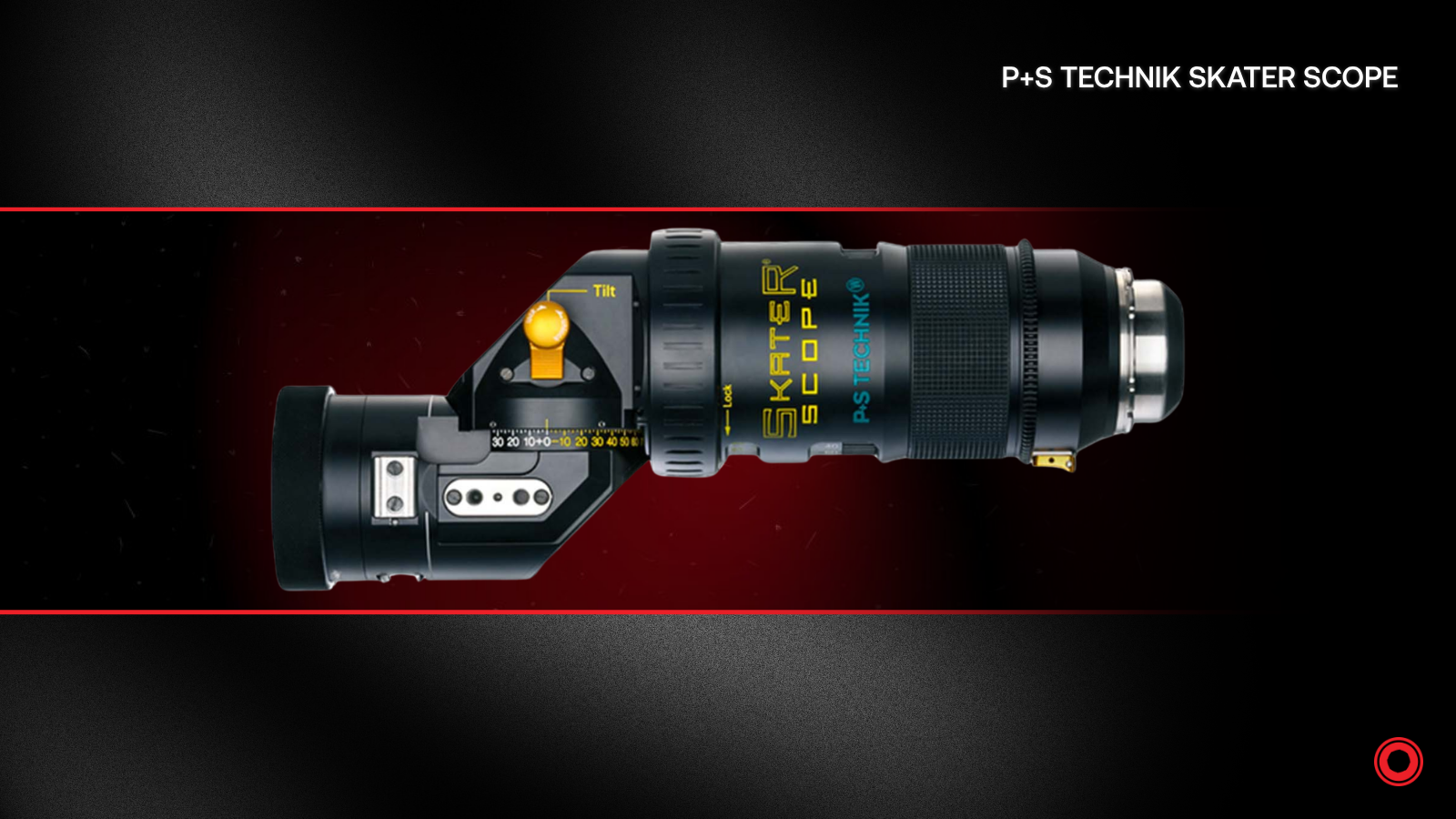
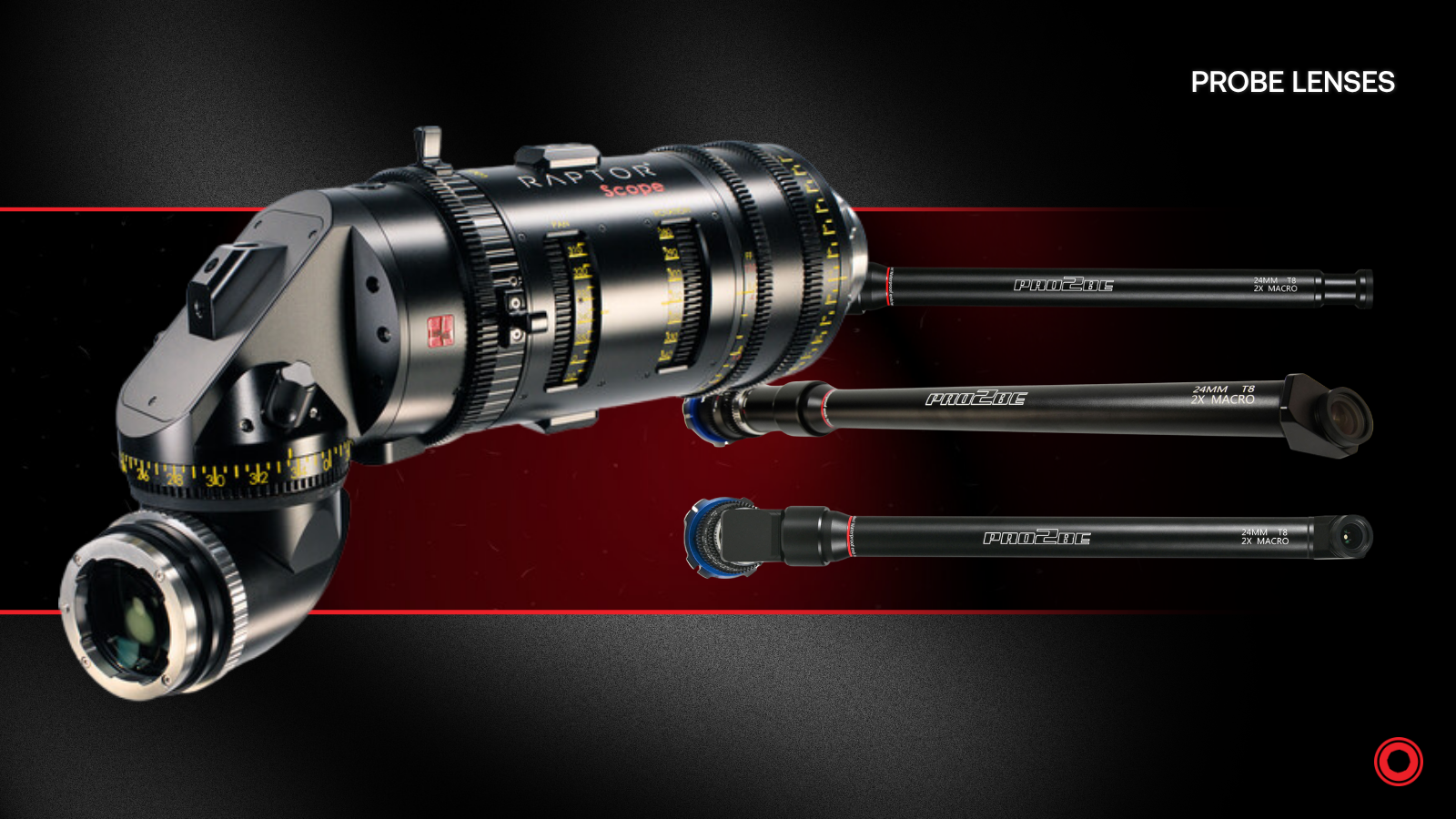
The problem was that conventional cinema lenses simply could not go where these shots demanded. Macro lenses could focus close but they remained physically large and could not enter tight spaces. Industrial borescopes existed but they produced images that were soft, dim, and unsuitable for professional filmmaking. This challenge inspired the development of the OpTex Excellence system. In the early 1990s the engineers at OpTex began designing a modular probe lens capable of delivering true Super 35 motion picture coverage while maintaining a long narrow barrel that could swiftly and easily traverse miniature environments. The project was ambitious. Probe optics require long chains of relay elements to transmit an image through the extended tube, and every additional optical surface introduces potential loss of contrast and resolution. After years of refinement OpTex introduced the Excellence Probe system. The design was revolutionary for its time. Instead of a single fixed probe, the system used modular relay tubes and interchangeable front optical heads. This allowed cinematographers to configure the lens as a straight probe, an angled periscope, or a macro relay system depending on the needs of the shot.

Throughout the 1990s and early 2000s the lens appeared quietly across the commercial and visual effects industry. It was rarely credited publicly but it became a staple tool on sets that demanded immersive macro photography. Food commercials, miniature environments, and complex product photography all benefited from the lens’s ability to place the audience directly inside the scene. Despite its influence the company behind the lens never grew into a large manufacturer. The market for such specialized optics remained small and the cost of producing them was significant. Over time the OpTex cinema division faded from the industry. Production ceased and the company eventually disappeared from the cine optics landscape. Yet the Excellence Probe never truly vanished. Rental houses continued to maintain the systems and cinematographers who had used them recognized their value. Even today the lens remains a rare but respected tool. In many ways it can be considered the ancestor of the modern probe lens category that would later be popularized by manufacturers like Innovision and Laowa. The language of macro cinematography that audiences now take for granted began with tools like this one.
Image Fidelity & Focus
The visual character of the OpTex Excellence Probe is shaped by the complex optical relay system that allows images to travel through the length of the probe. While modern probe lenses often aim for extremely clinical precision, the OpTex system carries a more organic cinematic signature. Contrast sits in a comfortable middle ground. Highlights roll off naturally rather than clipping abruptly which proves especially useful under the intense lighting environments common in tabletop cinematography. Macro photography frequently involves specular reflections from liquids, polished metals, and glass surfaces. The Excellence Probe handles these highlights with a gentle transition that preserves detail while maintaining a pleasing softness.
Sharpness is strongest through the central region of the frame where most macro subjects naturally fall. Toward the edges there is a gradual falloff in resolution that actually enhances subject isolation. Instead of appearing as a flaw this characteristic often helps direct the viewer’s attention toward the object of interest. Many cinematographers describe the look as slightly vintage when compared to modern ultra corrected macro lenses. The image remains detailed but carries a subtle softness that feels cinematic rather than clinical.
Color reproduction is neutral and balanced. Skin tones remain natural when the lens is used for extreme close ups of human features such as eyes or skin textures. Product photography benefits from this neutrality because surfaces and materials maintain accurate color representation without heavy tinting or exaggerated saturation. Chromatic aberration appears in small amounts at the extreme edges of the frame particularly on the widest optical heads. These artifacts remain controlled and rarely intrude upon the subject. Within the central field the image remains clean and stable. Focus behavior is where the lens reveals its true personality. At macro distances the depth-of-field becomes razor thin. Even a slight movement forward or backward can move the plane of focus across an object’s surface. This sensitivity allows filmmakers to highlight microscopic textures that would otherwise go unnoticed. A grain of sugar, a bead of condensation, or the fine machining on a metal component can become the entire visual landscape.
Handling & Adaptability
The mechanical design of the OpTex Excellence Probe reflects the complexity of its optical system. This is not a simple macro lens but rather a modular imaging tool engineered to place the camera where few other optics can reach. At its core the system consists of a relay module that attaches to a PL mount camera. From this base the probe extension extends forward, creating a long tubular structure that can reach deep into miniature environments. Depending on configuration the assembled system measures 16.75 inches in length. Weight varies depending on configuration but the relay module weighs about 6 lbs with the probe extension adding about 2 lbs. When fully assembled the system remains manageable yet clearly benefits from proper support rods and careful rigging. The weight distribution naturally shifts forward due to the long probe which means cinematographers often mount the system on sliders or motion control rigs to maintain stability.
One of the defining characteristics of the lens is its narrow probe diameter of 46 mm. This slim profile allows the lens to enter spaces that would be completely inaccessible to conventional cinema optics. The probe can travel through miniature doorways, pass between product packaging, or slide through complex tabletop builds without disturbing the set. The front optical heads determine the field-of-view. Instead of labeling the lenses with focal length markings the system identifies them by angle-of-view. The available options include 120º, 100º, 78º, 60º, and 43º. In familiar S35 terms these correspond roughly to focal lengths ranging from about 10mm through 40mm. Each optical head attaches to the probe and provides a distinct visual perspective. The wider options are ideal for immersive macro shots that place the camera within the environment while the longer perspectives compress the scene slightly and provide more controlled framing.
Periscope modules expand the versatility even further. By inserting angled mirror assemblies the system can capture images at 90º orientations relative to the probe. This capability allows the lens to peer over surfaces, look around obstacles, or capture overhead views without physically tilting the camera body. For tabletop cinematography this flexibility is invaluable because many miniature builds are fragile and cannot easily accommodate large camera movements. Close focus capability is extraordinary. The lens can focus to distances of less than 10mm from the front element. This means the lens can practically touch the subject while still achieving a sharp image. Combined with the wide angle optical heads the result is a perspective that feels impossible with traditional lenses. All of these mechanical elements were designed with professional cinema workflows in mind. The PL mount ensures compatibility with industry standard cameras while the modular construction allows cinematographers to adapt the system to a wide range of creative scenarios.
Image Circle
To understand the image circle of the OpTex Excellence Probe it is useful to briefly consider the S35 format that dominated motion picture production during the film era and remains common today in digital cinematography. S35 refers to a motion picture frame derived from standard 35mm film stock but using a larger exposed area by removing the traditional optical soundtrack region. When measured diagonally the format typically requires an image circle of 30mm to fully cover the frame without vignetting.
The Excellence Probe was specifically engineered to cover this format. The relay optics and front heads project an image circle that comfortably encompasses S35 diagonal which sits around 30mm. Due to this design the lens can operate on many modern digital cinema cameras that maintain similar sensor dimensions. Some digital formats slightly exceed traditional Super 35 dimensions which can introduce minor vignetting at the edges when using the widest optical heads. However in most practical applications the coverage remains sufficient for S35 capture. Designing a probe lens capable of projecting such a large image circle was a significant achievement during the 1990s. Many industrial probes of the time were limited to tiny sensor formats and could not produce images suitable for professional cinema photography.
Flare & Bokeh
The optical path of a probe lens is far more complex than that of a traditional prime. Light must travel through a sequence of relay elements along the length of the tube before finally reaching the camera sensor. Each element presents an opportunity for reflections or internal flare which is why careful coating and internal baffling are essential. The OpTex Excellence Probe handles this challenge remarkably well. Internal baffling within the relay tube helps absorb stray light before it can scatter across the image. Multi-layer coatings on the optical elements reduce reflections while preserving transmission through the extended optical chain. Under normal lighting conditions flare remains minimal. Contrast stays stable even when bright highlights appear within the frame. When the lens is pointed directly toward intense point sources thin streaks of light can occasionally appear along the axis of the probe. Rather than appearing distracting these streaks often contribute a subtle sense of atmosphere within the image.
Bokeh produced by the lens carries its own distinctive personality. Due to the long relay system and the geometry of the optical heads the bokeh tends to stretch slightly toward the edges of the frame. This produces an elliptical appearance that resembles a cat eye effect. In macro photography where depth of field is already extremely shallow these shapes add a subtle surreal quality to background highlights.
These lenses are available for rent at Cine Visuals. For inquiries or testing appointments email info@cinevisuals.com or call (323) 244-2552.