

Loading cart...

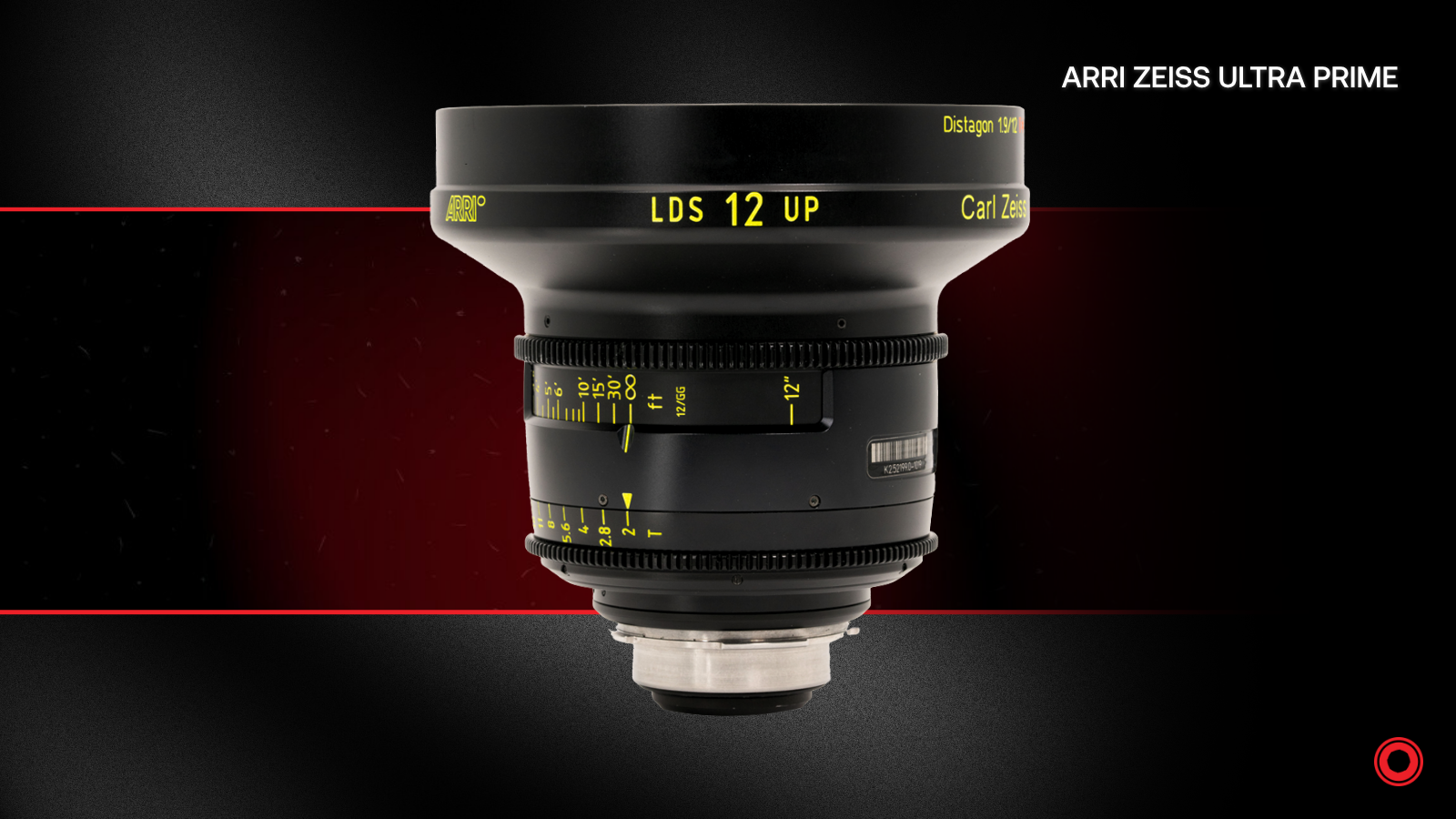
ARRI Zeiss Ultra Prime 8R: The Definitive Rectilinear Ultra-Wide Lens
ARRI, Zeiss, & Cine Visuals Present: ARRI Zeiss Ultra Prime 8R
Cinematic Heritage
When discussing the ARRI Zeiss Ultra Prime 8R, it is impossible not to begin with the long lineage of optical innovation that gave rise to it. The story stretches back well over a century to the founding of Carl Zeiss AG in the mid-nineteenth century. Established in 1846 by Carl Zeiss in Jena, Germany, the company began as a small workshop producing scientific instruments. What separated Zeiss from many of its contemporaries was its early embrace of scientific optical design. Rather than relying on intuition or traditional craftsmanship alone, Carl Zeiss partnered with physicist Ernst Abbe and glass chemist Otto Schott to mathematically engineer lenses from the ground up. That collaboration transformed optical design forever. The partnership introduced new glass formulas, rigorous calculations, and a systematic approach to correcting distortion, chromatic aberration, and contrast. It is not an exaggeration to say that the entire modern optical industry traces some part of its lineage back to that moment..
71 years later, another company in Germany was building a reputation for filmic engineering excellence in Munich. ARRI, founded in 1917, focused on developing motion picture cameras that could operate reliably in the demanding environments of film production. The partnership between ARRI and Zeiss felt inevitable. Each company approached technology with the same philosophy: design tools that empower filmmakers without distracting from the craft of storytelling. By the latter half of the twentieth century, the collaboration between ARRI and Zeiss had become one of the most important collaborations in cinema technology. Zeiss would design and manufacture the optics while ARRI would handle the mechanical housing, system integration, and global distribution for the motion picture market. Together they produced some of the most influential lenses ever created, including the legendary high-speed Super Speeds that became staples of narrative filmmaking in the 1970s and 1980s.

By the late 1990s another moment of transition had arrived. Visual effects were becoming increasingly central to large-scale filmmaking, and digital intermediate workflows were beginning to reshape post-production. Cinematographers needed lenses that were extremely sharp, consistent across the frame, and predictable from one focal length to the next. Variations in distortion or color that might once have been tolerated or even beloved could complicate VFX compositing or digital grading. Known for their combined engineering spirit, ARRI and Zeiss went to work. Their solution arrived in 1998 with the introduction of the ARRI Zeiss Ultra Prime series. The Ultra Primes were conceived as a modern set of spherical cinema lenses designed specifically for the S35 format. They offered exceptional sharpness, extremely low distortion, and a remarkable level of consistency across the entire lineup. Cinematographers quickly embraced them as they provided a clean, dependable image while still maintaining the subtle character associated with Zeiss glass. Within that lineup, the 8R occupied a unique position. Extremely wide focal lengths had long existed, but many introduced noticeable distortion or behaved more like fisheye lenses for specialty shots. Filmmakers often needed an ultra-wide perspective that maintained straight architectural lines and believable spatial relationships. The Ultra Prime 8R was designed to fill that gap. At 8mm on S35, the lens provides an enormous field of view while remaining rectilinear. Straight lines stay straight. Interiors appear expansive. Movement through space feels dramatic and immersive. The 8R became a practical storytelling tool that allowed cinematographers to capture environments in a way that felt both expressive and controlled.
Image Fidelity & Focus
The visual character of the ARRI Zeiss Ultra Prime lenses has always balanced technical precision with subtle artistry. They were engineered to be extremely sharp, but not sterile, which is perhaps the key distinction between them and most sharp modern lenses. Resolution is high across the frame, yet the rendering retains the natural tonal transitions that cinematographers often associate with classical cinema glass. The ARRI Zeiss Ultra Prime 8R embodies this philosophy particularly well. Ultra-wide lenses can sometimes feel chaotic, with warped edges and inconsistent sharpness pulling the viewer’s attention away from the subject. The 8R avoids this by maintaining an impressively controlled optical design. The image remains clear from center to corner, allowing the cinematographer to place subjects anywhere within the frame without sacrificing clarity. The truly defining quality of the 8R is its rectilinear rendering. Ultra-wide lenses frequently introduce barrel distortion that bends architectural lines outward near the edges of the frame. The 8R corrects for this remarkably well. Walls remain vertical. Horizons stay level. This control is invaluable when photographing environments such as hallways, urban architecture, or interior sets where straight lines define the visual structure of the frame.
Focus separation behaves somewhat differently on a lens this wide compared with longer focal lengths. As depth of field naturally increases at shorter focal lengths, the separation between subject and background is not driven purely by blur. Instead, the sense of depth emerges from perspective. Objects closer to the camera feel dramatically larger, while distant elements recede quickly into the environment. The result is a layered composition that emphasizes spatial relationships rather than shallow focus alone. The focus falloff itself is gentle. When a subject moves closer to the camera and falls slightly out of focus, the transition does not feel abrupt. Instead the image gradually softens, creating a smooth visual gradient that preserves the natural flow of the shot. This subtlety is one of the hallmarks of Zeiss optics. The lens resolves fine detail but allows the image to breathe. Within the Ultra Prime family, the 8R matches the color rendering and contrast characteristics of the rest of the set remarkably well. This consistency was a key design goal. Cinematographers often move fluidly between focal lengths during a scene, and any drastic shift in color balance or contrast can disrupt the visual continuity of the film. With the Ultra Primes, switching from a 32mm to an 8mm feels natural. The tonal palette remains steady, and the image language remains cohesive.
Handling & Adaptability
The Ultra Prime series was developed with practical filmmaking in mind, and the 8R reflects that philosophy in every aspect of its construction. Both ARRI and Zeiss are known for their incredibly ergonomic engineering design. While Zeiss designed the optics, ARRI is responsible for the mechanics and housing of the glass, an area they have excelled at from the beginning. The lens housing is robust and carefully engineered to withstand the rigors of professional production. Cinema lenses must endure constant lens swaps, heavy accessories, and long days mounted on camera rigs ranging from handheld systems to cranes and Steadicams. The Ultra Prime construction provides durability without becoming unwieldy and that was embedded even in the complex technology of the Ultra Prime 8R. Focus rotation is generous, giving camera assistants precise control when pulling focus. Wide-angle lenses can sometimes make focus adjustments feel abrupt because the depth of field changes quickly at close distances. The extended rotation on the Ultra Primes allows for delicate adjustments, ensuring smooth transitions during focus racks. Despite its large field of view, the 8R remains relatively manageable in weight and balance, which for a lens of this quality is not common. It can be comfortably used in handheld configurations or stabilized rigs without placing excessive strain on the operator. At the same time, its solid build ensures that the optical alignment remains stable even under demanding conditions. This balance between durability, consistency, and usability is a hallmark of the ARRI-Zeiss collaboration. The lenses are designed not just to perform optically but to integrate seamlessly into the workflow of a modern film set.
Image Circle
The Ultra Prime 8R was designed specifically with the S35 format in mind, which has long been the dominant capture format in motion picture production. To fully illuminate this format, a lens must project an image circle large enough to cover the entire sensor or film frame without vignetting. The Ultra Prime 8R provides coverage that comfortably meets this requirement. Its image circle extends to 31.1mm, matching the needs of S35 sensors and film gates. Illumination remains consistent across the frame, and edge sharpness stays strong. S35 is smaller than Full Frame formats which means less area for exposure. An 8mm lens effectively expands the visual possibilities of the format, allowing cinematographers to capture sweeping environments, expansive interiors, or dramatic perspective shots that would otherwise require much larger sensor or film plane sizes. This capability is particularly valuable when working in confined spaces. The Ultra Prime 8R allows filmmakers to include the entire environment within the frame while maintaining a natural geometric structure.
Flare & Bokeh
One of the defining traits of Zeiss lenses is their approach to flare control. The Ultra Primes employ the company’s well-known T* coatings, a multi-layer anti-reflective treatment designed to maximize light transmission while minimizing unwanted reflections between glass elements. Veiling flare is reduced, preventing the image from becoming washed out. At the same time the lens does not eliminate flare entirely but has a clean and restrained feeling. Instead it allows subtle optical artifacts that feel cinematic rather than distracting. They often manifest as soft halos or gentle streaks that generally lean slightly cool, a characteristic frequently associated with Zeiss optics. The Bokeh are circular toward the center of the frame, maintaining a pleasing softness while toward the edges, the bokeh takes on a gentle cat-eye appearance. Wide open the bokeh feel soft and translucent, almost painterly in the way they blend into one another. Stopped down, the bokeh tightens slightly, taking on a more defined structure while maintaining smooth edges.
This lens is available for rent at Cine Visuals. For inquiries or testing appointments email info@cinevisuals.com or call (323) 244-2552.