
Loading cart...

Cooke Anamorphic 2x: Elegant Anamorphics
Cooke & Cine Visuals Present: Cooke Anamorphic 2x
Cinematic Heritage
To understand the Cooke Anamorphic 2x lenses, it helps to step into the long arc of Cooke Optics itself. Founded in the late 19th century in Leicester, England, Cooke became one of the earliest architects of cinematic imagery. Through the work of pioneers like Horace W. Lee, Cooke lenses were never merely about resolving an image. They were about shaping how that image felt. The Cooke Panchros of the 1920s did not just solve technical limitations of early film stocks, they introduced a philosophy. Skin tones became natural and inviting. Focus falloff felt human rather than mechanical. Aberrations were not eliminated entirely but tuned into something expressive. Over time, this philosophy became known as the Cooke Look, a visual language that quietly defined decades of cinema.
Anamorphic lenses emerged from a very different origin. Adapted from optical systems originally developed for tanks in WW1, anamorphic designs found their cinematic purpose in the 1950s as Hollywood sought to compete with television. By compressing a wide field of view onto a standard 35mm film frame and then expanding it during projection, filmmakers could achieve a grand, panoramic image without sacrificing resolution. Systems like CinemaScope transformed the theatrical experience, introducing sweeping horizontal compositions and a new visual grammar that audiences came to associate with spectacle. Over time, anamorphic lenses developed a reputation for their imperfections as much as their advantages. They bent light in unusual ways. They flared dramatically. They distorted faces at close distances. For a period, particularly in the early digital era, these traits were seen as liabilities. Spherical lenses paired with S35 workflows became more practical and predictable. Yet cinematographers never lost their affection for anamorphic imagery. What had once been considered flaws gradually became desirable characteristics.
It was into this landscape that Cooke introduced the Anamorphic 2x series in the early 2010s. The goal was not to replicate vintage glass, nor to eliminate anamorphic character entirely. Cooke sought something more balanced. They wanted to create a modern anamorphic lens that could meet the demands of contemporary cinematography while preserving a sense of artistry. These lenses were designed to integrate seamlessly into digital workflows, offering consistency, reliability, and the familiar warmth of the Cooke Look, while still delivering the widescreen language that anamorphic capture provides.

Image Fidelity & Focus
Looking through the Cooke Anamorphic 2x lenses, the first impression is one of balance. These are not aggressively stylized lenses, yet they are far from sterile. Resolution is strong, especially for anamorphic glass, and holds across much of the frame. There is a clarity that supports modern digital sensors, but it never crosses into harshness. The image feels grounded and dimensional rather than etched.
Internally, the lenses are built with a front anamorphic design, which means the squeeze is applied at the front of the optical path rather than through rear elements. This contributes to their classic oval bokeh and characteristic horizontal expansion, but Cooke has carefully refined the optical formula to minimize many of the distortions traditionally associated with anamorphic systems. Astigmatism is controlled. Field curvature is moderated. Focus transitions are particularly striking. There is no abrupt boundary between sharpness and blur. Instead, the image falls away in layers, creating a sense of depth that feels almost sculptural. Subjects sit comfortably within their environment, neither overly isolated nor lost in the background. This is where the Cooke Look reveals itself most clearly. Skin tones carry warmth and softness without losing detail. Highlights roll gently, avoiding the brittle edge that can sometimes accompany high resolution capture. Cinematographers often choose these lenses because they occupy a rare middle ground. They are dependable enough for visual effects work and large scale productions, yet expressive enough to carry emotional weight. Films and series that seek a polished but human image often turn to Cooke anamorphics for precisely this reason. The lenses do not impose themselves on the story, but they subtly shape how that story is perceived. They allow the image to breathe.
Handling & Adaptability
Physically, the Cooke Anamorphic 2x lenses are substantial. They are not lightweight tools, and they do not attempt to be. The housings are robust, engineered to withstand the demands of professional production. Their size reflects the complexity of the optics within, particularly the front anamorphic elements that define their character. The lenses maintain a consistent front diameter across much of the set, typically around 110mm, with certain wider or specialty focal lengths expanding to 136mm. This consistency simplifies matte box setups and filtration, which is a significant advantage on set. Lens changes become more efficient, and camera assistants can work with confidence knowing that adjustments will be minimal.
Focus rotation is long and precise, giving focus pullers the ability to pull with accuracy and repeatability. The tactile feel of the focus ring is smooth and deliberate, offering resistance that feels intentional rather than mechanical. Aperture control is equally refined, allowing for subtle exposure adjustments without disrupting the shot. Cooke’s integration of their /i technology adds another layer of practicality. Lens metadata is transmitted directly to the camera, providing valuable information for post production, visual effects, and color workflows. In use, these lenses strike a balance between solidity and usability. They are well suited to tripod and dolly work, where their weight contributes to stability. At the same time, they remain manageable enough for handheld and stabilized systems when needed. The ergonomics are not about minimizing presence but about making that presence predictable and reliable. On a film set, that reliability translates directly into efficiency.
Image Circle
The story of the Super 35 image circle begins long before motion pictures. Standard 35mm film originated in still photography, with a frame measuring 36mm by 24mm and a diagonal of approximately 43.3mm. When motion picture cameras adapted this film stock, they reoriented the frame vertically and introduced what became known as the Academy format. This reduced the usable image area to roughly 22mm by 16mm, with a diagonal near 27mm. S35 emerged later as a way to reclaim more of the negative area. By utilizing the full width of the 35mm film strip and forgoing the traditional optical soundtrack space during capture, filmmakers could achieve a larger image area with a diagonal typically ranging from about 31.1mm. This format became especially popular in the late 20th century because it paired well with spherical lenses which were popular for VFX, while still allowing for widescreen extraction in post.
Anamorphic lenses approached the problem differently. Rather than cropping the image to achieve a wide aspect ratio, they compressed a wider field of view onto the same 35mm frame. During projection or digital processing, the image would then be expanded horizontally, restoring its intended proportions. This allowed filmmakers to capture a wide cinematic image without sacrificing vertical resolution. The Cooke Anamorphic 2x lenses are designed specifically for this S35 ecosystem. Their image circle measures approximately 33.5mm diagonally, providing full coverage for S35 sensors and film gates. This precise coverage ensures that the lenses deliver consistent performance across the frame while maintaining the intended anamorphic characteristics. It is a deliberate choice that ties the lenses to a format that has defined modern cinematography for decades.
Flare & Bokeh
Flare and bokeh are where the personality of the Cooke Anamorphic 2x lenses becomes most visible. Unlike more aggressive anamorphic designs, these lenses approach flare with restraint. When a strong light source enters the frame, horizontal streaks emerge, stretching elegantly across the image. These streaks are typically clean and controlled, often appearing white with a subtle warmth that reflects Cooke’s color philosophy. They do not overwhelm the frame but instead add a layer of atmosphere, like a quiet echo of the light itself. Internal reflections are carefully managed, which prevents the image from collapsing into haze. Contrast softens slightly in the presence of flare, but detail remains intact. There is a sense that the lens is responding to light rather than reacting unpredictably.
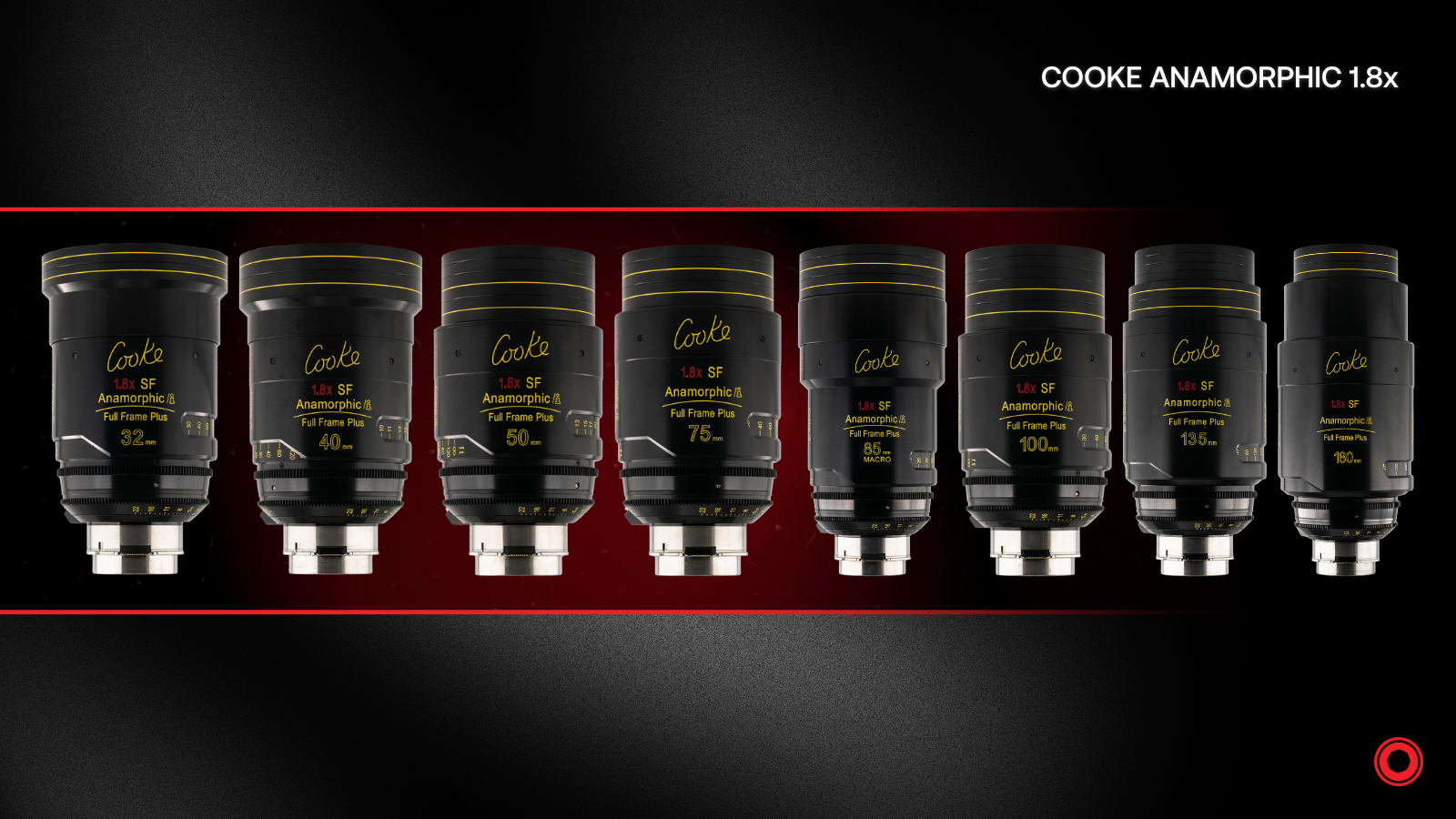
For cinematographers who want flare to play a more active role, the Cooke Anamorphic/i 2x Special Flare is a variation of the same set built around flare-enhancing coatings. The SF lenses respond more aggressively to light sources, producing more pronounced streaks, halos, and veiling flare artifacts with greater visual intensity than the standard version. They retain the Cooke Look throughout, including the warm color reproduction, smooth contrast, and natural depth the standard set is known for, but flare becomes a more deliberate and prominent part of the image. Both sets maintain the full 2x squeeze and the anamorphic characteristics that come with it. The choice between them comes down to how much space flare is meant to occupy in the frame.
Bokeh carries the unmistakable imprint of the 2x squeeze. Out of focus highlights stretch into vertical ovals, a direct result of the horizontal compression applied during capture. In the center of the frame, these shapes are smooth and well defined, with soft edges that give them a creamy, almost liquid quality. As they move toward the edges, they begin to tilt and elongate further, creating a subtle sense of motion within the background. This interaction with light transforms ordinary points of illumination into expressive elements. Streetlights become glowing ellipses. Reflections ripple into abstract forms. The background does not simply blur, it reshapes itself. Depth becomes more than a technical attribute, it becomes a visual language. The Cooke approach ensures that this language remains elegant. The bokeh is distinctive without being chaotic, expressive without becoming distracting.
These lenses are available for rent at Cine Visuals. For inquiries or testing appointments email info@cinevisuals.com or call (323) 244-2552.