
Loading cart...

Cooke Anamorphic 1.8x: New Full Frame Anamorphic Age
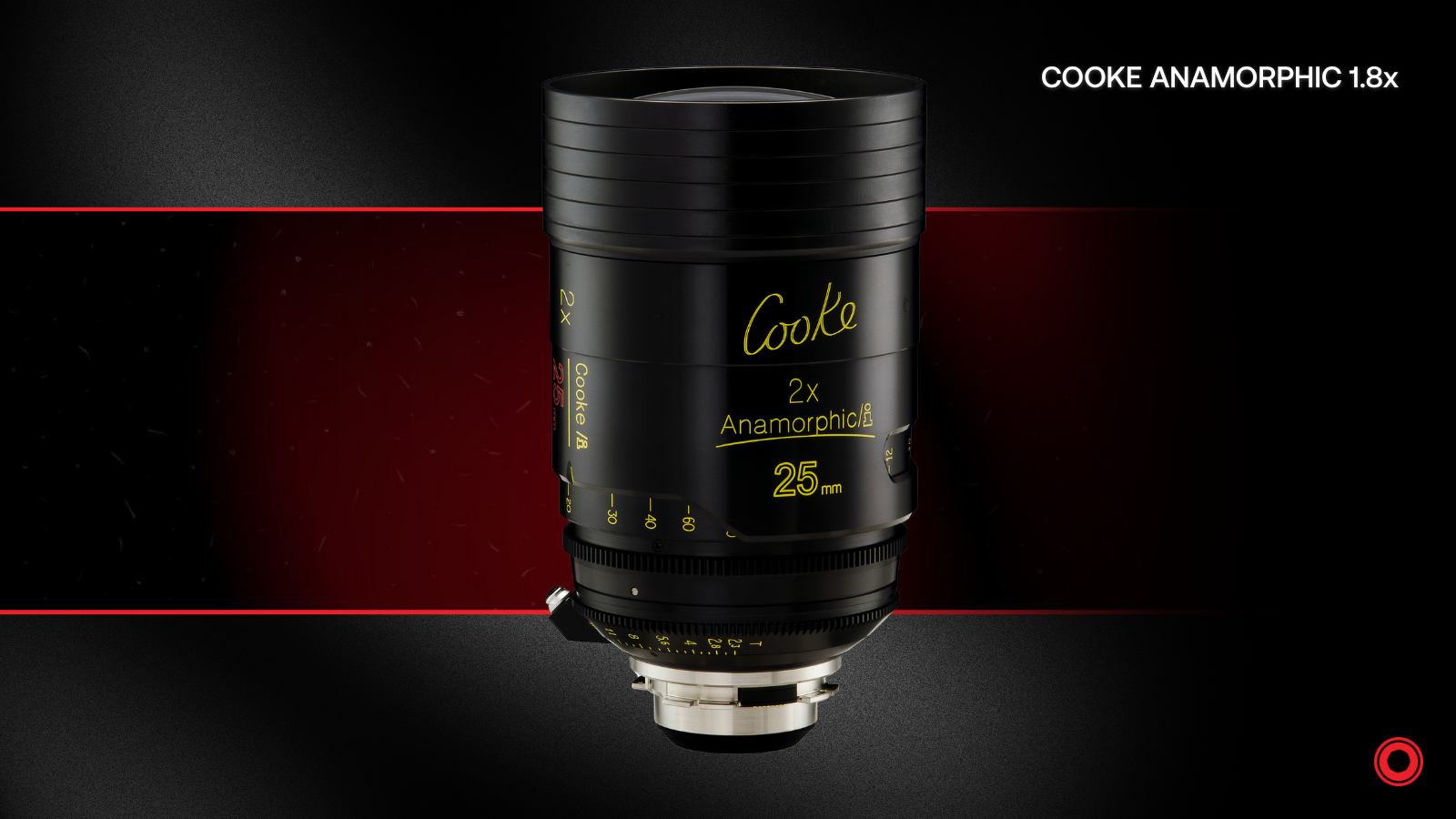
Cooke & Cine Visuals Present: Cooke Anamorphic 1.8x FF
Cinematic Heritage
Founded in the late 19th century in Leicester, England, Cooke has always approached optics with a philosophy that goes beyond resolution charts and technical perfection. From the earliest days of the Cooke Triplet, the company pursued an image that felt human. Over decades of cinema, that philosophy evolved into what cinematographers now call the Cooke Look. It is not a single measurable trait but a combination of warmth, dimensionality, and a gentle rendering of contrast that gives images an emotional presence. Faces feel alive. Light feels soft without losing structure. Focus falls away in a way that mirrors how we perceive the world rather than how machines measure it.
Originally derived from optical systems developed during the early 20th century for military applications, anamorphic lenses were adapted for filmmaking in the 1950s as Hollywood searched for a way to compete with television. Systems like CinemaScope transformed the medium by allowing filmmakers to compress a wide field of view onto standard 35mm film and expand it during projection. The result was a sweeping panoramic image that redefined cinematic language. Along the way, anamorphic lenses developed a personality of their own. Horizontal flares, oval bokeh, and subtle distortions became part of the visual identity. For a time, especially during the early digital transition, these traits were considered too cumbersome for emerging VFX. Yet as digital images became cleaner and more clinical, those very imperfections returned as something desirable. They brought life back into the frame.
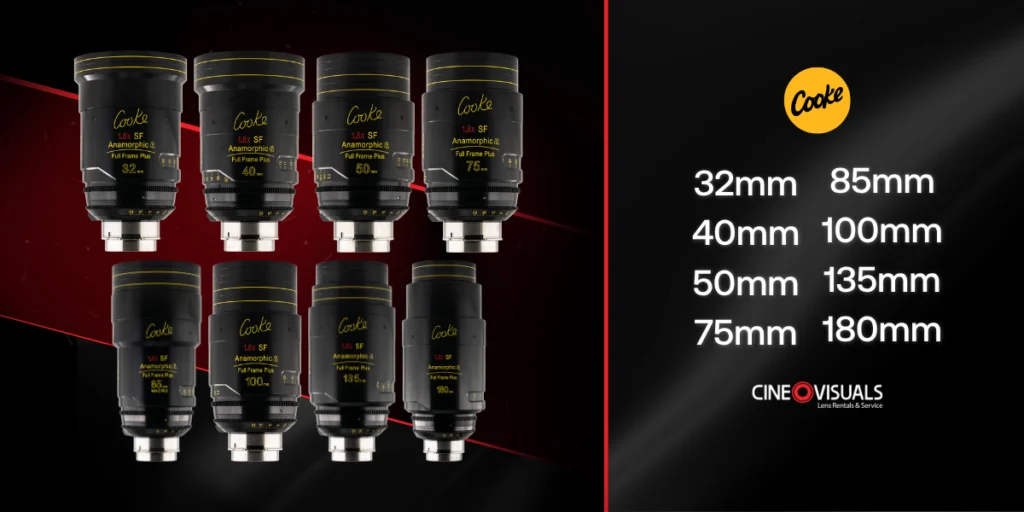
The Cooke Anamorphic 1.8x FF lenses were born from a moment when another shift was underway. Full Frame digital sensors, inspired by formats like VistaVision, were becoming increasingly common. Cinematographers wanted the scale and resolution of larger sensors but still craved the language of anamorphic capture. Traditional 2x anamorphic lenses were often too aggressive for these formats, requiring heavy cropping or introducing optical compromises at the edges. Cooke’s answer was the 1.8x squeeze. It sits in a carefully chosen middle ground, wide enough to deliver unmistakable anamorphic character, yet refined enough to fully embrace the geometry of Full Frame capture. These lenses were not designed to imitate the past or to chase technical perfection. They were designed to translate the Cooke Look into a new era of large format cinematography.
Image Fidelity & Focus
Looking through the Cooke Anamorphic 1.8x FF lenses, the impression is immediate and deeply familiar to anyone who has spent time with Cooke glass. The image feels alive. Resolution is strong and well suited to modern high resolution sensors, yet it never feels brittle or over sharpened. There is a softness at the edges of contrast that gives highlights a gentle roll and allows skin tones to breathe. The Cooke Look remains intact, now infused with the spatial character of anamorphic optics.
The combination is where these lenses truly distinguish themselves. Anamorphic compression introduces a subtle horizontal expansion that reshapes the world just enough to feel cinematic. Faces retain a natural proportion thanks to the 1.8x squeeze, avoiding the exaggerated distortion of more aggressive designs. At the same time, the background begins to stretch and separate, creating a layered sense of depth. Focus falloff becomes an experience rather than a transition. Subjects do not simply snap into sharpness and drop away. They emerge from a soft, dimensional space and return to it just as gracefully. There is a sculptural quality to this falloff that cinematographers often describe as painterly. The center holds clarity, while the edges gently relax. Astigmatism is present but controlled, contributing to the signature oval bokeh without overwhelming the frame. The result is an image that feels grounded and dimensional. It carries the precision required for modern production while maintaining an organic texture that feels distinctly cinematic.
Handling & Adaptability
Physically, the Cooke Anamorphic 1.8x FF lenses are unapologetically robust. The optical complexity required to cover Full Frame with anamorphic elements at the caliber Cooke provides demands a certain presence. Wider focal lengths often carry a front diameter of 136mm, while much of the set standardizes around 110mm. This consistency is a quiet advantage on set. Matte boxes are easily taken off and put back on. Filter changes are predictable. Lens swaps become faster and more efficient, which directly benefits the pace of production. The housings themselves are built with Cooke’s characteristic attention to ergonomics. Focus rotation extends to a generous 270º, giving focus pullers the room for precision. The resistance is smooth and deliberate, allowing for controlled, repeatable pulls. Aperture adjustments feel equally refined, enabling subtle exposure changes without disrupting the shot. Integrated Cooke/i Technology provides real time lens metadata, feeding information directly into the camera system and simplifying workflows for post production and eliminating the troublesome nature of anamorphics for VFX mapping. There is weight here, certainly, but it is balanced weight. On a tripod or dolly, the lenses feel stable and grounded. On handheld or stabilized rigs, they are a bit heaveir but reward that effort with consistency and reliability. These lenses are tools designed for professional environments where predictability matters. Their size reflects their capability, and their design ensures that capability translates into a smoother, more efficient on set experience.
Image Circle
The story of Full Frame cinematography begins long before digital sensors. Standard 35mm film was originally designed for still photography, with a horizontally oriented frame measuring 36mm x 24mm. When motion pictures adopted this film size, the frame was rotated vertically, creating the familiar 4-Perf format that defined cinema for decades. This reduced the usable image area but allowed for continuous movement through the camera.
The idea of returning to a horizontal orientation reappeared in the form of VistaVision, which ran 35mm film sideways through the camera using an 8-Perf frame. This approach increased resolution and expanded the image area, creating a larger and more detailed negative. While VistaVision eventually faded from mainstream use, its influence never disappeared. Modern Full Frame digital sensors are a direct descendant of that design philosophy. They return to a larger imaging area, offering greater resolution and a different spatial relationship within the frame. The Cooke Anamorphic 1.8x FF lenses are designed specifically for this sensor size. With a diagonal image circle of 46.3mm, they comfortably exceed the 43.3mm requirement for most Full Frame coverage. Cameras such as the ARRI Alexa LF, ARRI Alexa Mini LF, Sony Venice, and RED V-Raptor all fall well within this range. The choice of a 1.8x squeeze is central to this design. It allows the lenses to maximize the use of the Full Frame sensor while producing a widescreen image that feels natural and balanced. The geometry aligns beautifully with a 1.5 aspect ratio sensor, expanding into a cinematic frame without excessive cropping. This efficiency makes the most of every pixel while preserving the expressive qualities of anamorphic capture.
These lenses also pair elegantly with modern large format systems like the Fujifilm Eterna 55 when used in Premista coverage mode. The combination of generous image circle and carefully chosen squeeze ratio allows cinematographers to explore new compositional possibilities while maintaining consistency across formats. It is a design that respects the past while fully engaging with the present. The Cooke Anamorphic 1.8x FF lenses and the Fujifilm Eterna 55 are both available for rent at Cine Visuals and make an excellent pair.
Flare & Bokeh
Flare and bokeh are where the soul of anamorphic lenses reveals itself, and the Cooke Anamorphic 1.8x FF lenses approach these characteristics with a sense of restraint and elegance. When a strong light source enters the frame, horizontal streaks appear, stretching across the image with a clarity that feels intentional rather than chaotic. These flares are not overly aggressive. They do not overwhelm the frame unless invited to do so. Instead, they respond to light with a quiet confidence, adding atmosphere without sacrificing control. For cinematographers who want to push further, the Special Flare version of the 1.8x Full Frame set offers a more expressive flare response within the same optical family. The horizontal streaks are more pronounced, halos carry more presence, and bright sources interact with the glass in a way that reads clearly on screen. It is not uncontrolled, but it is deliberate about giving the image more character. Across the standard and Special Flare versions, Cooke’s tuning keeps the image from collapsing into haze. Highlights bloom gently, carrying a subtle warmth that complements skin tones, while contrast remains usable in challenging lighting conditions. This balance is what makes flare a creative tool rather than an unpredictable artifact.
Bokeh carries the unmistakable signature of the 1.8x squeeze, that classic ovular bokeh, but with a bit of restraint as compared to a full 2x squeeze anamorphic. In the center of the frame, these shapes are smooth and rounded, with soft edges that give them a creamy, almost liquid quality. Toward the edges, they begin to elongate and tilt, introducing a subtle sense of motion within the background. There is a quiet beauty in how these lenses render defocus. The background does not simply blur. It transforms. Points of light become expressive shapes. Reflections stretch and soften. The entire frame takes on a sense of depth that feels both natural and cinematic. This is where the Cooke philosophy and anamorphic design meet most clearly. The image remains elegant, controlled, and deeply human, even as it bends light in ways that remind us we are watching something crafted.
These lenses are available for rent at Cine Visuals. For inquiries or testing appointments email info@cinevisuals.com or call (323) 244-2552.