
Loading cart...

ARRI Zeiss Ultra Prime: 21st Century Optics for the Age of VFX
ARRI, Zeiss, & Cine Visuals Present: ARRI Zeiss Ultra Primes
Cinematic Heritage
In 1846 in Jena, Germany, Carl Zeiss started with a small workshop producing microscopes and scientific instruments. Carl Zeiss distinguished himself from many early optical manufacturers with his commitment to a scientific approach to lens design. Instead of relying solely on craftsmanship and intuition, Zeiss partnered with physicist Ernst Abbe and glass chemist Otto Schott to develop lenses using rigorous mathematical modeling and newly formulated optical glass. This collaboration fundamentally reshaped the way lenses were designed. Aberrations could be calculated and corrected rather than guessed at. Contrast and chromatic performance could be predicted before a single element was polished. The modern field of optical engineering grew directly from the scientific framework that Zeiss, Abbe, and Schott established.
71 years later another German company would begin its own journey into cinematic history. In 1917, August Arnold and Robert Richter founded a small company in Munich called Arnold & Richter Cine Technik, better known today as ARRI. While Zeiss was redefining optical science, ARRI focused on the practical engineering challenges of motion picture production. Film cameras in the early twentieth century were complex mechanical devices that had to operate reliably under demanding conditions. ARRI built its reputation on durability, precision engineering, and a deep understanding of the needs of cinematographers. One of the company’s most influential innovations arrived in 1937 with the introduction of the Arriflex 35, the first widely adopted motion picture camera with a reflex mirror shutter that allowed operators to view directly through the taking lens while filming. This breakthrough changed cinematography forever and established ARRI as a leader in camera design.
The partnership between Zeiss and ARRI emerged naturally from these complementary strengths. Zeiss possessed generations of expertise in optical design while ARRI understood the mechanical realities of filmmaking. By the latter half of the twentieth century the two companies had formed one of the most important collaborations in cinema technology. For the creation of the ARRI Zeiss Ultra Primes, Zeiss crafted the optics themselves, designing the complex arrangements of glass elements that shape the image while ARRI built the housings and mechanical systems that allowed those optics to function reliably on film sets around the world. The results of this collaboration became some of the most beloved lenses ever created for motion picture production. By the late 1990s the industry was entering another period of transition. Visual effects were rapidly becoming more prominent in large scale filmmaking and digital intermediate workflows were beginning to transform the post production pipeline. Compositing artists needed images that were clean, sharp, and consistent. Distortion variations between lenses or unpredictable optical artifacts could complicate VFX work and slow down post production. Recognizing this shift, ARRI and Zeiss set out to design a new generation of spherical cinema primes that would offer exceptional optical clarity while maintaining the subtle character that made Zeiss glass so respected.

Their answer arrived in 1998 with the introduction of the ARRI Zeiss Ultra Prime series. The Ultra Primes were conceived as a complete set of lenses built specifically for the S35 format which had long been the standard capture format for motion picture film. The lineup eventually grew to sixteen focal lengths ranging from the expansive 8mm Ultra Prime 8R to the telephoto reach of the 180mm. The design philosophy emphasized sharpness, low distortion, and remarkable consistency across the entire set. Cinematographers quickly embraced them as dependable workhorses capable of delivering clean images for modern workflows while still retaining the refined tonal qualities associated with Zeiss optics. Over time the Ultra Primes would become one of the defining lenses of the late film era and bridge the gap to the early digital age and beyond.
Image Fidelity & Focus
The visual character of the ARRI Zeiss Ultra Prime lenses is often described with a single word that appears again and again in cinematographers’ conversations. Balanced. These lenses were engineered during a time when filmmakers needed high resolution images that could hold up to increasingly demanding post production processes without feeling sterile or clinical. Zeiss approached the optical formulas with the same philosophy that had guided their lenses for decades. The image should be precise, but it should also feel natural. Across the entire set the lenses maintain excellent center to corner sharpness. Fine detail is resolved with clarity while edges remain controlled and free from distracting aberrations. Distortion is carefully controlled so that architectural lines remain stable. Chromatic aberration is minimized so that edges do not separate into distracting color fringes. These qualities made the lenses especially valuable on productions that relied heavily on visual effects. For example, the sweeping landscapes and elaborate digital environments of “The Lord of the Rings” films of the early 2000s demanded lenses capable of delivering sharp, consistent imagery that could integrate seamlessly with visual effects. The Ultra Primes quickly proved themselves well suited to that challenge. Yet technical precision is only part of the story. Ultra Primes lenses have long been admired for their subtle handling of tonal transitions. Contrast is present and well defined but not harsh. Skin tones appear smooth and natural. Colors lean slightly cool in the shadows, a quality often associated with classic Zeiss rendering, while mid-tones remain neutral and pleasing.
Focus behavior plays an equally important role in the lenses’ artistic appeal. The transition from sharp focus to softness is gradual and elegant. Rather than snapping abruptly from one plane to another, the Ultra Primes allow the image to gently drift between focal planes. Subjects appear crisply defined while the background recedes with a painterly softness. Even on wider focal lengths where depth of field naturally increases, the perspective relationships created by the optics maintain a strong sense of spatial layering.
The consistency across focal lengths is one of the defining achievements of the Ultra Prime set. Switching from an 8mm to a 24mm to a 50mm to a 100mm does not alter the tonal character of the image. Contrast, color rendering, and sharpness remain remarkably uniform. This cohesion allows cinematographers to change lenses freely without worrying that the visual language of the film will shift unexpectedly. In many ways this consistency reflects the scientific discipline that has always guided Zeiss optical design.
Handling & Adaptability
While Zeiss engineered the optical formulas, ARRI focused on the mechanical design that would allow those optics to perform reliably in real world production environments. Cinema lenses must endure constant handling, frequent lens swaps, heavy accessories, and long days on set. ARRI approached the Ultra Prime housings with the same meticulous engineering philosophy that had guided its camera systems for decades.
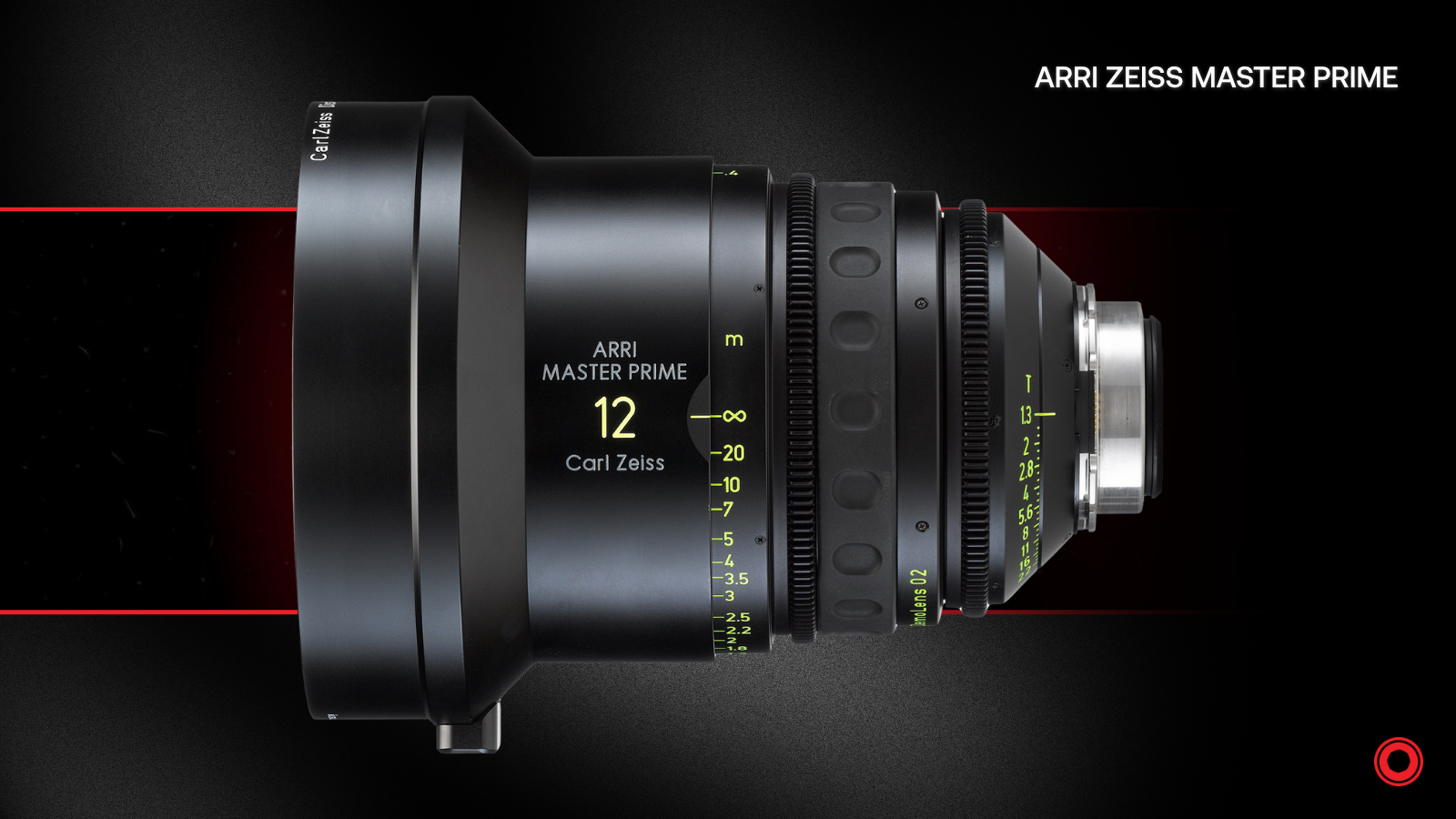
One of the most important goals was consistency across the set. Camera assistants rely on predictable physical layouts to work quickly and efficiently. 11 out of 15 of the primes ranging from 16mm to 135mm of the Ultra Primes share the same 95mm front diameter which simplifies matte box setups and filter changes. The 14mm and 180mm use a 114mm front diameter while the extremely wide 12mm expand to 156mm and the famous 8Rmm has a front diameter of 134mm. This limited variation keeps the system manageable while still accommodating the optical requirements of each focal length.
The physical dimensions of the lenses were also designed with uniformity in mind. Nearly all of the focal lengths including the 16mm, 20mm, 24mm, 28mm, 32mm, 40mm, 50mm, 65mm, 85mm, and 100mm share a compact housing length of approximately 3.70 in. The 14mm extends slightly to 4.40 in while the 12mm measures around one 5.50 in. The 8R are larger still, reflecting the complexity of their ultra wide optical designs. At the telephoto end the 135mm reaches 4.70 in and the 180mm extends to 6.50 in. An extremely compact form factor for the powerhouse nature of these lenses. Weight is another area where the design shows careful balance. Many of the central focal lengths weigh close to 2.40 lbs which keeps the lenses manageable for handheld operation, Steadicam work, or stabilized rigs. Wider lenses such as the 14mm and 12mm weigh closer to 4 lbs and 4.40 lbs respectively. The telephoto 180mm weighs roughly 5.70 lbs. Despite these variations the set remains relatively lightweight compared with many other high end cinema lenses of similar optical performance.
Focus rotation is generous and smooth, typically around 270º. This gives focus pullers the precision needed to execute delicate focus transitions during a shot. The focus rings are dampened carefully so that movement feels controlled and repeatable even during rapid adjustments. Gear placement remains consistent across the set which allows motors to stay mounted in the same positions when lenses are swapped. Small design decisions like these save valuable time on set and reduce the physical workload of the camera crew. In practice these mechanical choices allow the Ultra Primes to integrate seamlessly into the fast paced environment of film production. The lenses have a reputation of being solid and dependable while remaining compact enough to support handheld and mobile shooting styles.
Image Circle
The Ultra Primes were designed specifically for S35. For S35 coverage the measurement is 31.1mm. The Ultra Prime lenses were engineered to comfortably cover this area with consistent illumination and sharpness from center to edge. The 8R, 12mm, 14mm, 16mm, 20mm, 24mm, 28mm, 32mm, 40mm, 50mm, 65mm, 85mm, 100mm, 135mm, and 180mm all project an image circle of 31.1mm. Cinematographers can move freely between lenses knowing that each will fully illuminate the S35 frame without vignetting or illumination falloff. The foresight of the design has allowed these lenses to remain highly relevant in the modern era. Many contemporary digital cinema cameras such as the ARRI Alexa35 feature S35 sensors that align perfectly with the Ultra Prime image circle as well as the resurgence in popularity of shooting 35mm film.
Flare & Bokeh
Zeiss equipped the Ultra Primes with its renowned T* coatings which are designed to reduce internal reflections between glass elements. These multi-layer coatings increase light transmission and help maintain contrast by minimizing veiling flare. At the same time the coatings do not eliminate flare entirely. Flares often appear as soft halos or gentle streaks that stretch across the frame. Their coloration tends to lean slightly cool, a quality long associated with Zeiss lenses. Rather than overwhelming the image these flares add a touch of atmosphere while preserving the underlying contrast of the scene.
The aperture design of the Ultra Primes produces rounded bokeh that remains smooth and pleasing throughout much of the frame. Wide open the highlights appear soft and luminous with gentle edges that blend naturally into the background. As the lenses are stopped down the circles tighten slightly while maintaining their rounded shape. Toward the outer edges of the frame the bokeh begins to take on a subtle cat eye appearance as the optical geometry compresses the highlights into elliptical shapes. This effect is gentle rather than dramatic. It adds a hint of visual character without distracting from the subject. When multiple highlights overlap they create a layered, painterly background that cinematographers often find extremely appealing.
These lenses are available for rent at Cine Visuals. For inquiries or testing appointments email info@cinevisuals.com or call (323) 244-2552.