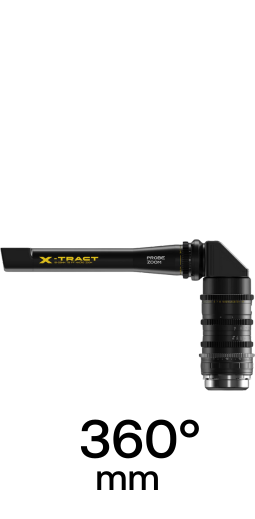
One of the defining characteristics of probe lenses is their combination of wide-angle perspective with close-focus capability. Unlike lenses built around high-magnification precision, probe lenses typically operate at wider focal lengths while still allowing the camera to get extremely close to the subject. This creates a unique visual effect where foreground elements appear exaggerated while still maintaining environmental context in the background.
Depth of field behaves differently with probe lenses compared to standard macro systems. Because of the wider focal lengths, probe lenses can maintain more depth of field at close distances, making it easier to keep multiple planes in focus while still working at extreme proximity. This is one of the reasons they are frequently used in product work, tabletop shoots, and stylized commercial production where both detail and spatial context are important.
Lighting demands increase significantly with probe lenses. Many systems operate at very slow T-stops, and the physical design places the front element so close to the subject that standard lighting placement often becomes impractical. Some probe lenses use built-in ring lights, while others require highly controlled external lighting to compensate for light loss and restricted access around the subject. Understanding how to light for a probe lens is as important as choosing the lens itself.
Probe lenses are also built to handle environments that would be difficult for standard lenses. Many designs are waterproof or can be used in challenging conditions, allowing the lens to move through liquids, tight mechanical spaces, or confined environments without compromising the shot. This expands their use beyond controlled studio work into more experimental or practical shooting scenarios.
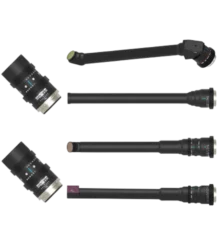
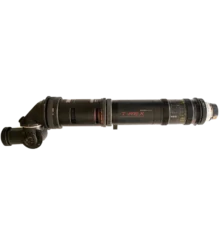
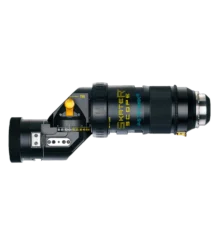
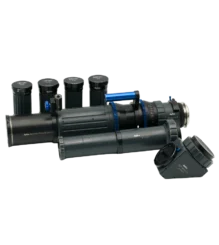
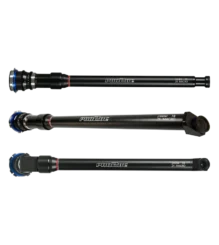
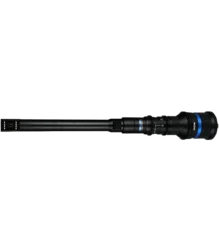
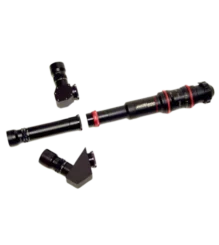
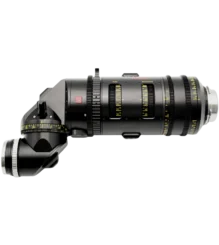
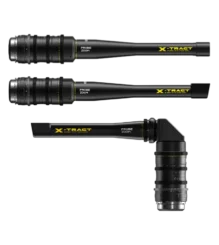
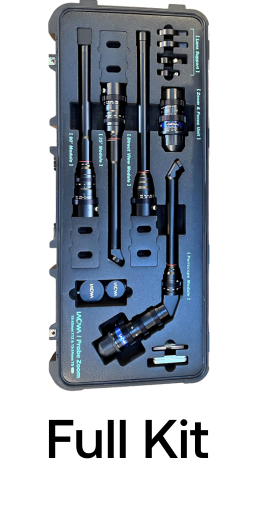
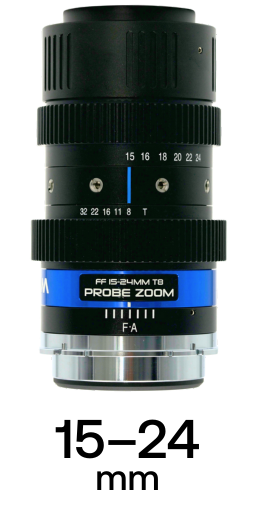
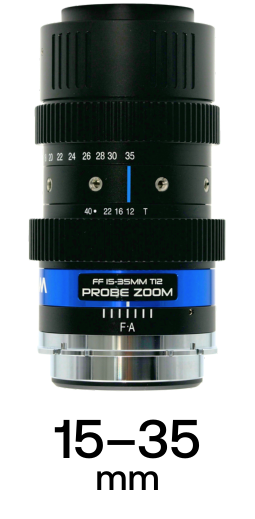
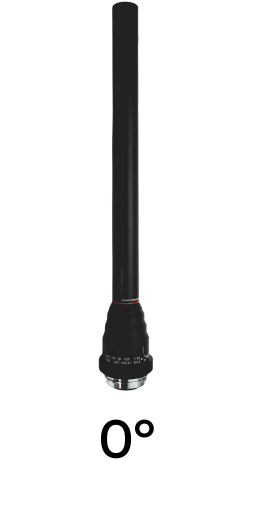
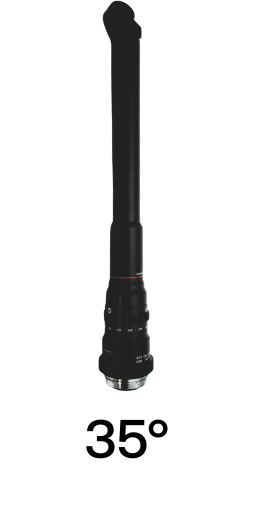
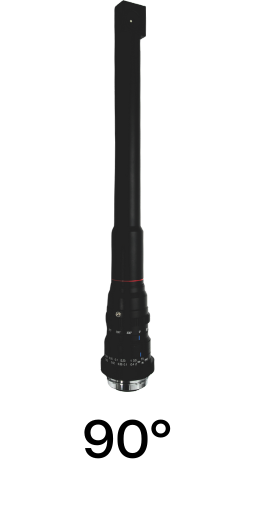
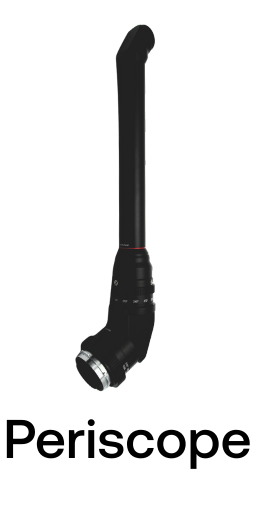
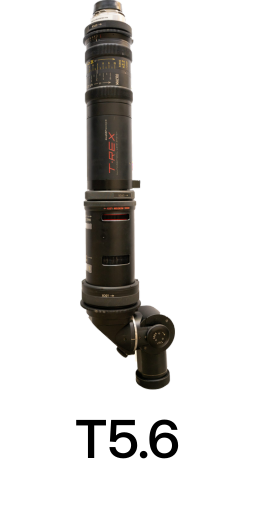
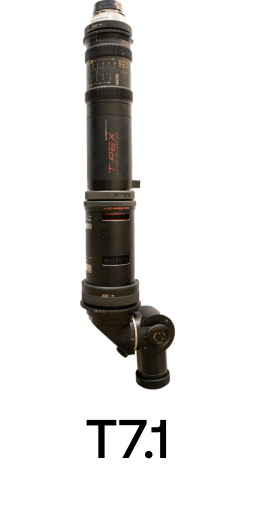
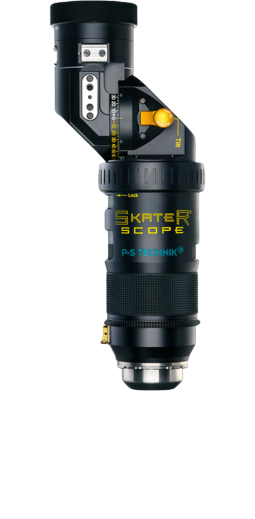
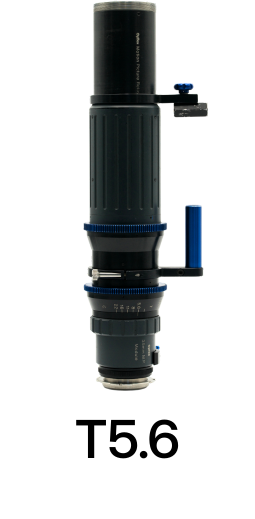
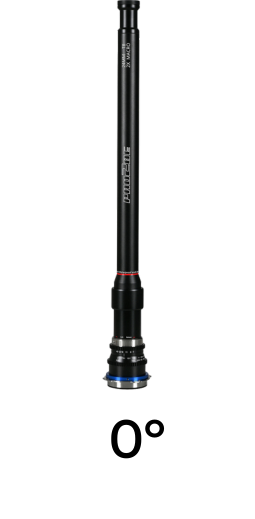
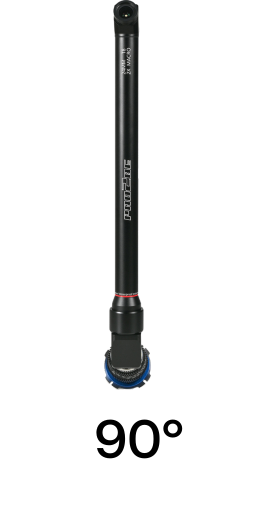
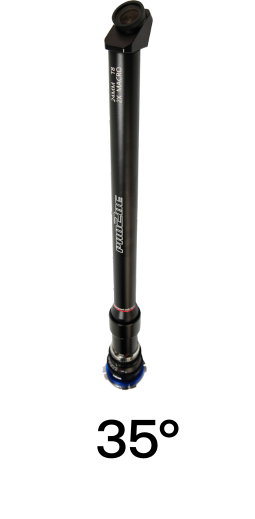
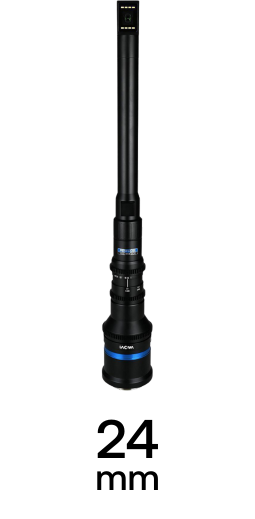
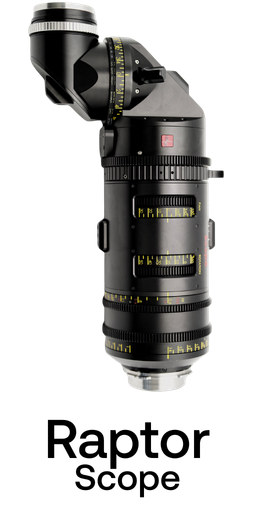
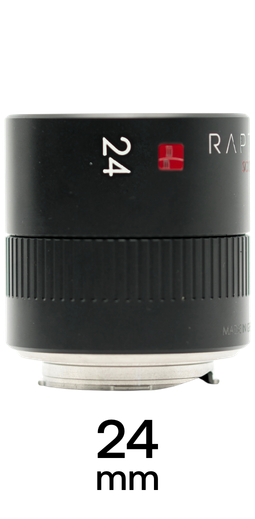
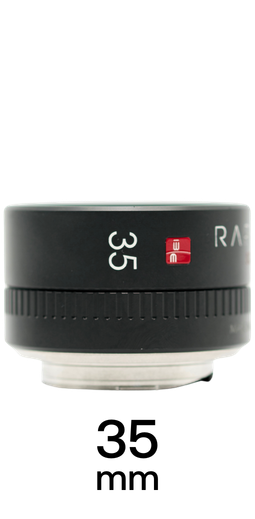
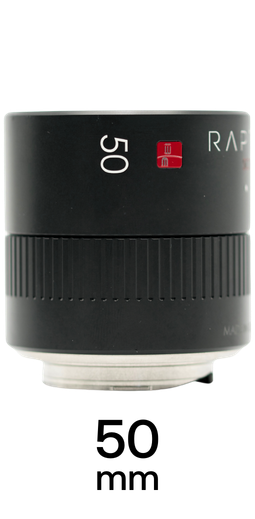
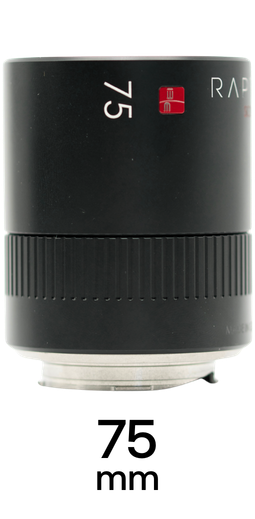
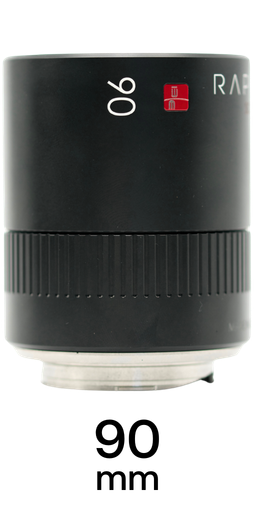
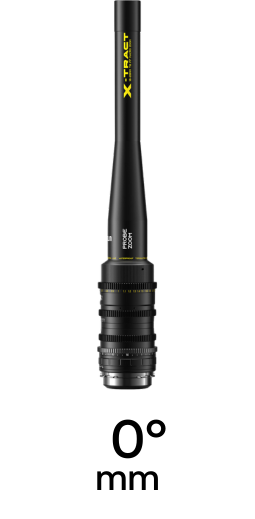
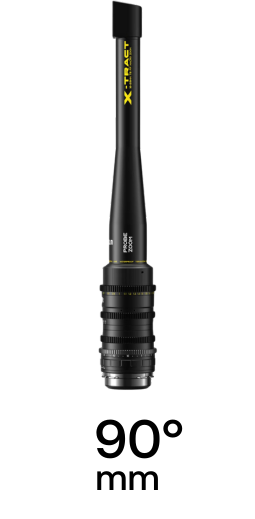
Cine Visuals carries a range of probe lens systems that cover both traditional fixed designs and more advanced optical configurations. This includes specialty variable focal length systems like the Laowa Probe Zooms and the DZO X-Tract, which allow operators to reframe directly within a tight space without moving the physical camera body. The inventory also includes complex setups like the IB/E Raptor Scope, which extend probe capability through articulated, periscope, or directional movement that a fixed probe design cannot provide.
The differences between probe systems are not just in focal length, but in how they move and what they allow the camera to do. Some are fixed straight probes designed for direct access into tight spaces, while others introduce additional articulation or periscope-style movement, allowing the lens to change direction within a confined environment. These differences significantly affect how a shot can be executed.
Most probe systems in the inventory are built to cover Super 35 sensor formats, and a number extend image circle to accommodate larger format bodies as well. Because of these large image circles, productions working on smaller 16mm platforms can confidently use these tools without worrying about vignetting. Confirming coverage before booking is always worth doing, particularly if the camera package has not been locked yet. The majority of cinema-grade probe lenses ship with a PL mount as standard, though some manufacturers offer EF or LPL mounts depending on the system.
All probe lenses are tested and prepared in-house before leaving the facility. Due to their design, these lenses require careful handling and precise setup to perform correctly, especially when used in challenging environments. Ensuring that they are ready for real-world production conditions is part of the standard preparation process.
Productions working in a stylized or high-end commercial context sometimes pair probe coverage with anamorphic glass for wider or establishing shots, giving the overall cut a distinct optical character while the probe handles access-driven angles. Similarly, shoots that lean into a raw or period aesthetic occasionally bring in glass with age and optical character to complement the probe work on cutaways or environmental framing.
Probe lenses are often considered alongside macro lenses, but they serve a different purpose. Macro lenses are designed for precision at close distances, while probe lenses are designed for access and perspective. In many cases, productions will use both, depending on whether the shot requires controlled close-focus precision or physical access within a confined space.
Probe cinema lenses are a specialized solution for shots where physical access, wide-angle close focus, or directional movement inside a confined space is part of the requirement. Their value comes from solving spatial and optical problems that standard lenses are not built to handle.
Frequently Asked Questions
What is a probe lens used for in cinematography?
Probe lenses are used to capture shots in tight or hard-to-reach spaces, allowing the camera to move into environments where standard lenses cannot fit. They are commonly used in product, tabletop, and stylized commercial work.
How is a probe lens different from a macro lens?
Macro lenses are designed for high magnification and optical precision at close distances, while probe lenses are designed for physical access and unique perspective, often combining wide-angle views with close-focus capability.
Do probe lenses require special lighting?
Yes. Because the lens sits very close to the subject, lighting can be more challenging. Many probe lenses use built-in ring lights or require specialized lighting setups to properly illuminate the scene.
Where can probe cinema lenses be rented?
Probe cinema lenses are available through Cine Visuals. All systems are tested and prepared in-house to ensure reliable operation in demanding production environments.