

Loading cart...

Caldwell Chameleon: Sleek Modern Anamorphics
Caldwell Optics & Cine Visuals Present: Caldwell Chameleon Anamorphics
Cinematic Heritage
The story of the Caldwell Chameleon Anamorphic Lenses begins with the career of optical designer J. Brian Caldwell, whose work has shaped a wide range of imaging technologies over the past four decades. Caldwell’s path into lens design traces back to his academic training at the University of Rochester Institute of Optics, one of the world’s most respected centers for optical science. There he developed not only theoretical knowledge of optical engineering but also a hands-on understanding of lens fabrication and design. Grinding and polishing optics during his education gave him an unusually practical perspective on how optical systems behave outside the purely theoretical world of equations and simulations.
After completing his doctoral studies, Caldwell’s career quickly expanded across multiple branches of the optics industry. His work included aerospace imaging systems, military optics, forensic imaging lenses, and consumer camera technology. Over time he became known as a designer capable of balancing high-performance optical engineering with creative visual intent. In 2001 he founded his own company, Caldwell Photographic, an independent optical design firm dedicated to developing specialty optics and consulting on imaging systems.
Caldwell’s reputation grew further when he developed the Metabones Speed Booster in collaboration with Metabones. The Speed Booster dramatically altered the mirrorless camera ecosystem by using a focal-reducing optical element to increase light transmission and restore a wider field of view on smaller sensors. That project demonstrated Caldwell’s ability to rethink traditional optical solutions and bring them into modern imaging environments.
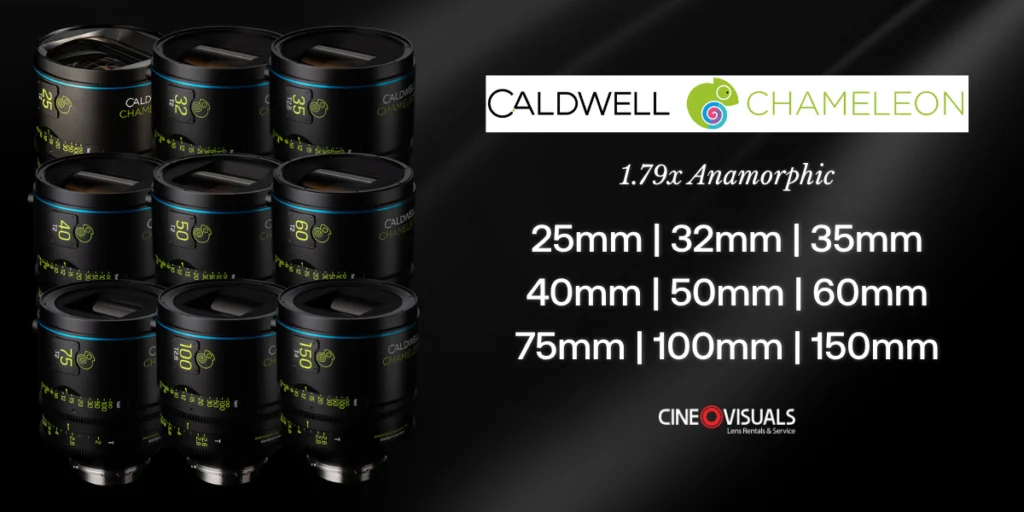
The Chameleon Anamorphics grew out of a similar impulse to rethink established lens technology. Traditional anamorphic lenses have long been prized for their distinctive visual character, but many of the classic designs date back to the mid-twentieth century. While they deliver iconic imagery, they often come with practical drawbacks such as mechanical inconsistency, focus artifacts, and limited close-focus capability. Digital cinema cameras, with their extremely high resolution sensors and demanding production workflows, place new expectations on optical performance. Caldwell set out to design a lens system that would preserve the expressive character cinematographers love about anamorphic imagery while addressing the technical limitations that often accompany vintage lenses.
The development process for the Chameleons began in the mid-2010s and culminated in their release in 2019. Rather than rehousing vintage optics or simply modifying older formulas, Caldwell designed the Chameleons from the ground up as a modern anamorphic system. The goal was not to replicate the past exactly, but to reinterpret it with contemporary optical engineering. The result was a lens family that merges the visual poetry of classic anamorphic cinematography with the reliability and precision required by modern production. High-profile series such as “The Umbrella Academy”, “The Mandalorian”, and “The Perfect Couple” have all employed Chameleon optics in the hands of leading cinematographers. Their presence on productions of this scale helped establish the lenses as a credible modern anamorphic option, capable of delivering both the aesthetic qualities and the reliability demanded by large-scale filmmaking.
Image Fidelity & Focus
From an optical standpoint, the Caldwell Chameleon Anamorphics take a distinctly modern approach to anamorphic design. While many contemporary anamorphic lenses attempt to reproduce the look of vintage glass by allowing uncontrolled aberrations to remain in the optical path, Caldwell pursued a more deliberate strategy. The Chameleons were engineered to deliver high resolution and controlled geometry while selectively preserving certain aberrations that contribute to a classic anamorphic look. They are crafted to be malleable for cinematographers to create the look and versatile for on-set workflows.
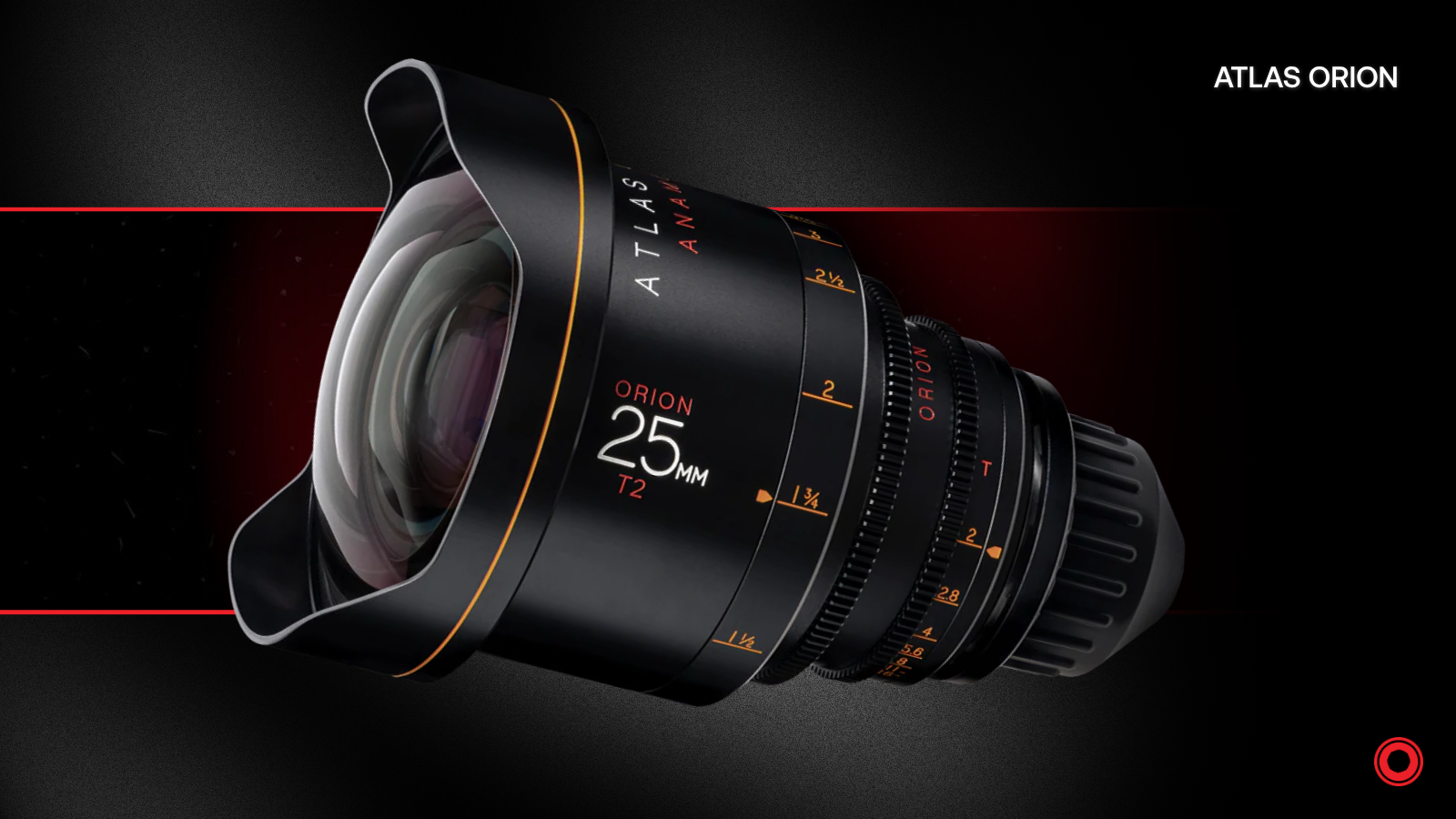
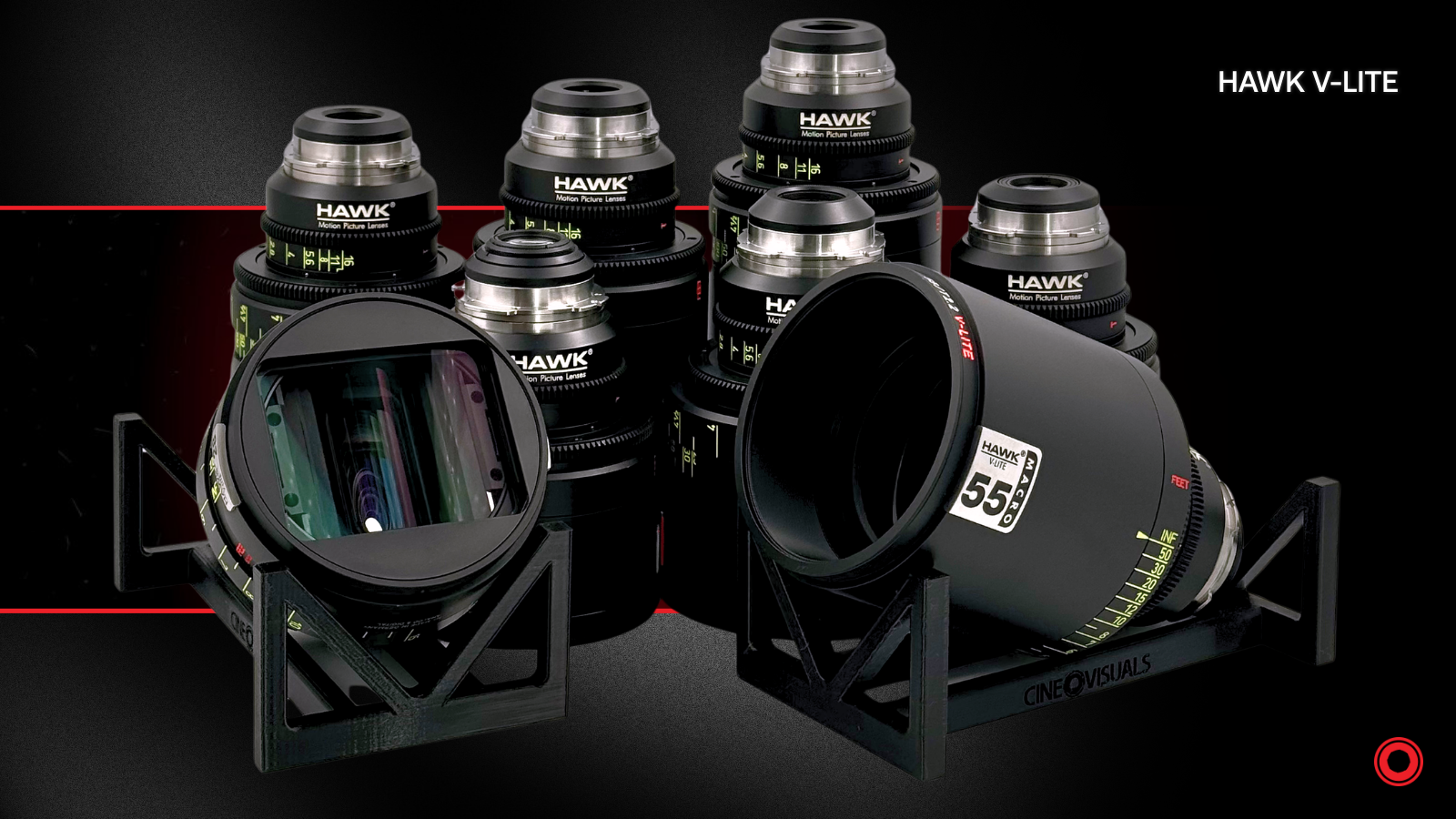
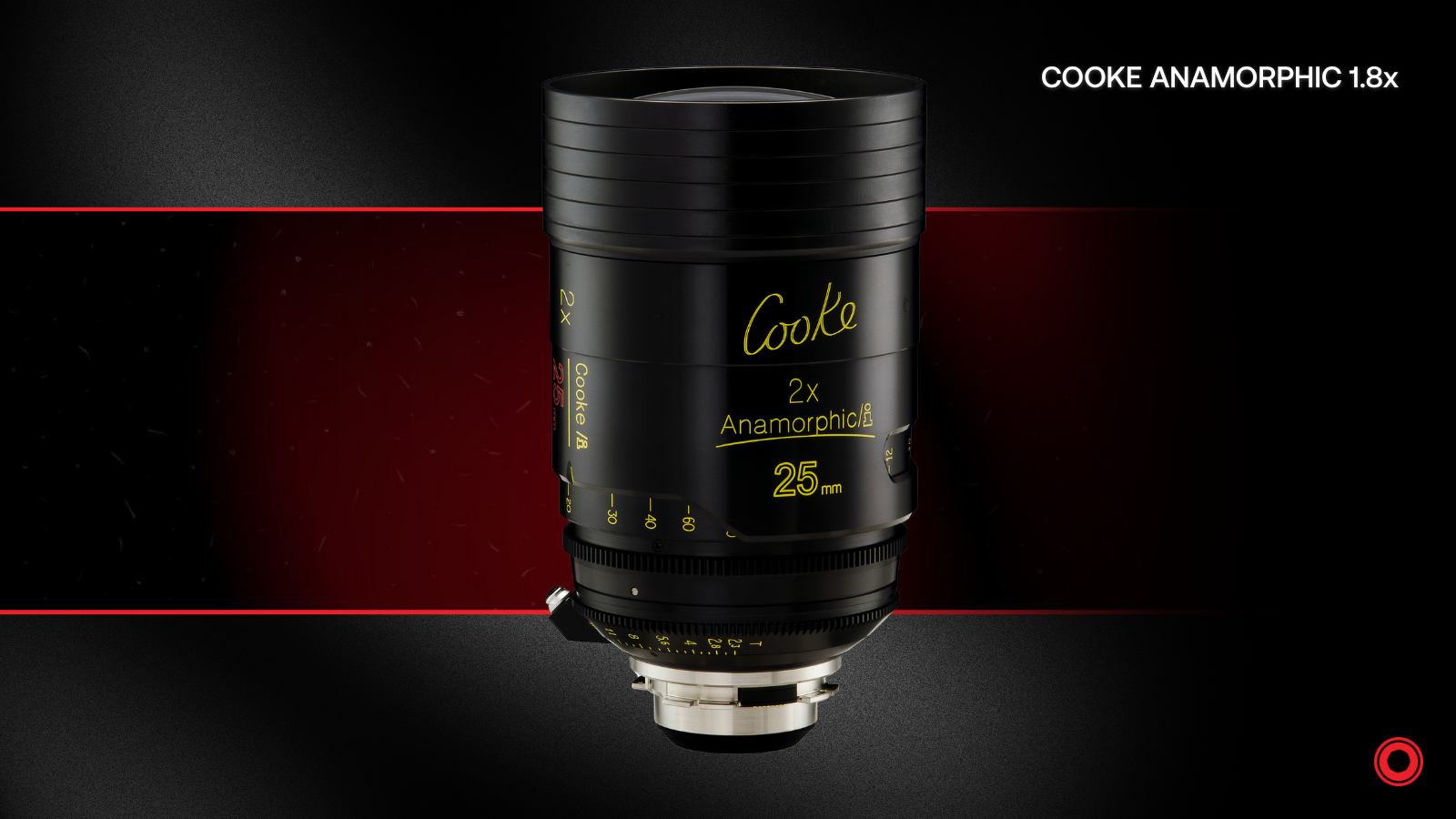
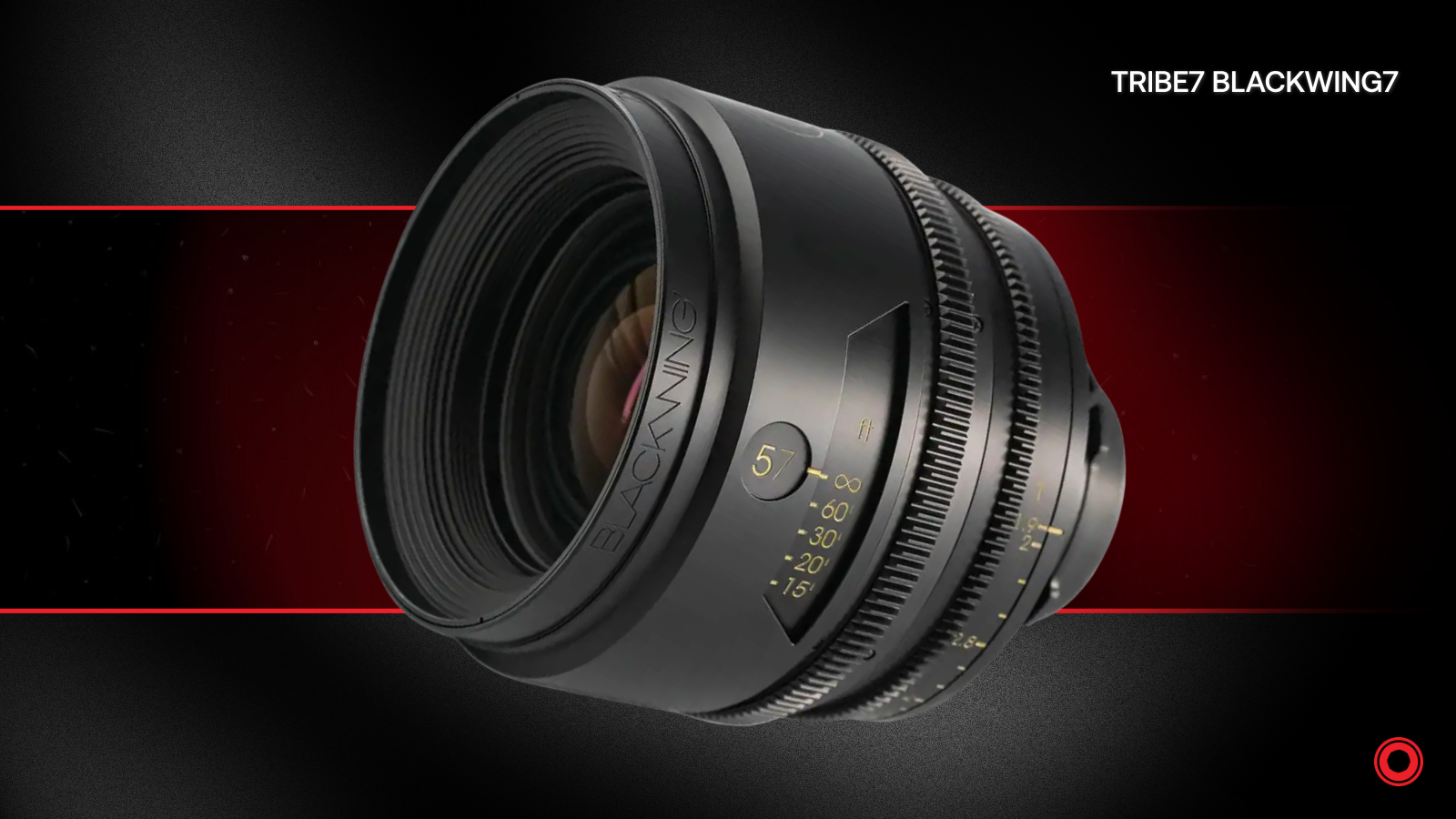
One of the defining features of the system is its unusual 1.79x anamorphic squeeze ratio. Traditional anamorphic cinema lenses typically employ a 2x squeeze, a legacy of early widescreen film formats. Caldwell chose a slightly lower squeeze factor to better accommodate the aspect ratios of modern digital sensors. Other brands have also experimented with different squeeze ratios such as Hawk V-Lite 1.3x, Atlas Mercury 1.5x, and Cooke Anamorphic 1.8x. All of these are designed to better suit digital sensors, Full Frame workflows, and give more flexibility in the amount of anamorphic qualities the image has.
Resolution across the frame is remarkably consistent. The Chameleons were designed to perform well on modern high-resolution digital cinema cameras, which means the lenses maintain strong contrast and detail even toward the edges of the frame. At the same time, the optical design allows for gentle falloff in sharpness that contributes to a sense of depth and dimensionality. Instead of the abrupt drop-off sometimes associated with vintage anamorphic lenses, the Chameleons exhibit a gradual transition between areas of critical focus and softer background regions.
The focusing mechanism plays a major role in maintaining this optical consistency. Caldwell implemented a Wallin-style front anamorphic group, a design approach that minimizes the well-known “anamorphic mumps” effect. In older lenses, focusing can cause the horizontal compression of the image to shift slightly, leading to subtle distortions in facial proportions during focus pulls. By carefully controlling the movement of the anamorphic elements, the Chameleon lenses maintain a stable squeeze ratio throughout the focus range.
Focus roll-off is another area where the Chameleons excel. The lenses produce a smooth and organic transition from sharpness into defocus. Subjects appear well defined within the plane of focus, yet the surrounding image gradually dissolves into softer textures rather than falling away abruptly. This quality contributes to a strong sense of separation between foreground and background elements, allowing subjects to stand out within the frame while preserving the overall cohesion of the image.
Distortion is also tightly controlled. Many anamorphic lenses exhibit noticeable barrel distortion or asymmetrical stretching toward the edges of the frame. Caldwell’s design minimizes these effects without eliminating the beloved signature look of anamorphic imagery. The geometry remains consistent enough for visual effects integration and modern digital workflows, yet the image retains enough character to avoid the sterile precision sometimes associated with purely technical optics.
Handling & Adaptability
Beyond their optical performance in imagery, the Caldwell Chameleon Anamorphics were designed with the practical realities of film production in mind. Modern cinematography often operates under intense time constraints, and equipment must be able to integrate seamlessly into a wide variety of camera systems and shooting conditions. The mechanical design of the Chameleons reflects a clear understanding of these requirements.
All focal lengths share a consistent housing length of approximately five and a half inches and a standardized 114-millimeter front diameter. This uniformity means that matte boxes, filters, and other accessories can remain in place when switching lenses. Lens swaps become faster and more predictable, which helps maintain momentum on set and reduces interruptions during complex setups. This is extremely uncommon for anamorphic lenses, to have this level of uniformity – even modern anamorphic lenses – thus making this a major boon for productions.
The placement of focus and iris gears is also standardized across the set. Follow-focus units and lens motors can remain in their established positions when moving from one focal length to another, eliminating the need for constant adjustments. For camera assistants responsible for maintaining focus accuracy, this consistency greatly simplifies the process of preparing and operating the lenses.
Focus rotation ranges from approximately 253 degrees to 300 degrees depending on the focal length. This generous rotation provides precise control for focus pullers without requiring excessive movement. In dramatic productions where subtle focus transitions are essential for storytelling, the ability to execute smooth and accurate pulls can make a significant difference in the final image.
Image Circle
An essential aspect of any cinema lens system is its image circle, the diameter of the projected image that the lens can cover without vignetting. The Caldwell Chameleon lenses were designed with multiple coverage configurations to accommodate the evolving landscape of digital cinema sensors.
In their standard SC configuration, the lenses are optimized primarily for Super 35 format cameras. The 25mm lens produces a diagonal image circle of approximately 31.1mm, while the 32mm and up extend coverage slightly to about 33 millimeters. These values comfortably cover the active imaging area of S35 digital cinema sensors as well as 4-Perf 35mm film, ensuring full illumination across the frame without darkened corners.
For productions requiring larger formats, Caldwell developed the XC or “expanded coverage” configuration. These versions of the lenses incorporate modified rear optical groups that extend the image circle to approximately 50mm. This coverage is sufficient for large-format digital cinema cameras such as the ARRI ALEXA LF and the RED V-Raptor. By designing the lenses with interchangeable optical modules, Caldwell created a system that can evolve alongside changing camera technologies. The ability to support both S35 and large-format sensors makes the Chameleon lenses particularly versatile. Cinematographers can maintain a consistent visual style across different camera platforms, whether shooting on a S35 sensor or Full-Frame. Now with digital cameras such as the Fujifilm Eterna 55 and the rising popularity of 65mm motion picture film, the Caldwell Chameleon Anamorphics now also have the XLC rear optic that extends coverage of the lenses to cover these medium format film planes. The Fujifilm Eterna 55 natural 3:2 sensor coupled with the Chameleon’s 1.79x squeeze, this creates a natural 2.39 desqueezed image and are a perfect match with the XLC rear optic. The Fujifilm Eterna 55 as well as the Chameleons are both available for rent here at Cine Visuals – a wonderful pair.
Flare & Bokeh
The Caldwell Chameleon Anamorphics produce the recognizable anamorphic horizontal flare reminiscent of classic anamorphic cinema optics. However, the flare remains controlled and does not overwhelm the image. Instead of washing out contrast or introducing excessive artifacts, the Chameleon flare tends to remain confined to elegant horizontal streaks that complement the composition of the frame. This controlled flare behavior results from the lens coatings applied to the cylindrical anamorphic elements. Rather than employing extremely aggressive anti-reflection coatings that eliminate flare entirely, Caldwell opted for a more restrained approach. The coatings allow a small amount of internal reflection to occur, producing the characteristic anamorphic streak without compromising overall image quality.
Bokeh, the visual appearance of out-of-focus highlights, is equally distinctive in the same classic anamorphic way. Like other anamorphic lenses, the Chameleons compress the image horizontally during capture, causing the bokeh to take on an elongated, elliptical shape. The Chameleon lenses render these highlights with a soft, creamy texture that contributes to a pleasing separation between subject and background. Most focal lengths in the set employ 14 blades, while some use 12. This high blade count helps maintain rounded highlight shapes even when the lens is stopped down, avoiding the polygonal patterns sometimes seen in lenses with fewer blades. Instead of creating abrupt edges or distracting artifacts, the Chameleon lenses allow highlights to dissolve gradually into soft elliptical forms. The absence of swirling distortion or chaotic edge patterns contributes to a refined visual aesthetic that remains cinematic without appearing exaggerated.
These lenses are available for rent at Cine Visuals. For inquiries or testing appointments email info@cinevisuals.com or call (323) 244-2552.