

Loading cart...

Cooke Anamorphic/i 2x Zoom: Artistic Elegance
Cooke & Cine Visuals Present: Cooke Anamorphic/i 2x Zoom
Cinematic Heritage
To understand the Cooke Anamorphic 2x Zoom, it helps to begin where all Cooke lenses begin, with a philosophy that stretches back more than a century. Cooke Optics was born in Leicester, England in the late 19th century, at a time when optics were still being defined as much by intuition as by science. Through the work of Horace W. Lee and his contemporaries, Cooke developed not just lenses but a way of seeing. Early innovations like the Cooke Triplet laid the groundwork for what would become a defining visual identity. By the 1920s, the Cooke Panchros were shaping the look of cinema itself. These lenses were not about perfection in a clinical sense. They were about balance, about rendering people and environments in a way that felt natural and emotionally resonant. Over time, this sensibility became known as the Cooke Look, a quiet but powerful influence that still echoes through modern cinematography.
Anamorphic lenses arrived from a very different lineage. Originally developed for expanding fields of view in armored vehicles, anamorphic optics found their cinematic purpose in the 1950s. Hollywood was searching for a way to pull audiences back into theaters as television gained popularity. By compressing a wide image onto standard 35mm film and expanding it during projection, anamorphic systems created a sweeping, immersive frame without sacrificing resolution. CinemaScope and its contemporaries introduced audiences to a new visual language, one defined by width, scale, and a certain expressive imperfection. Over time, those imperfections became part of the appeal. The streaking flares, the oval bokeh, the subtle distortions all contributed to an image that felt alive.
Parallel to this evolution was another challenge that would reshape cinematography. The development of the cine zoom lens. Early zooms struggled with sharpness, exposure consistency, and most critically the ability to maintain focus while zooming. The concept of parfocality – maintaining focus in the full range of the zoom – became the ultimate problem. A true cine zoom had to hold focus throughout its range, allowing cinematographers to reframe within a shot without interruption. Solving this required extraordinary mechanical and optical precision. By the latter half of the 20th century, zoom lenses had matured into reliable tools, though they were still often seen as optically compromised compared to primes.

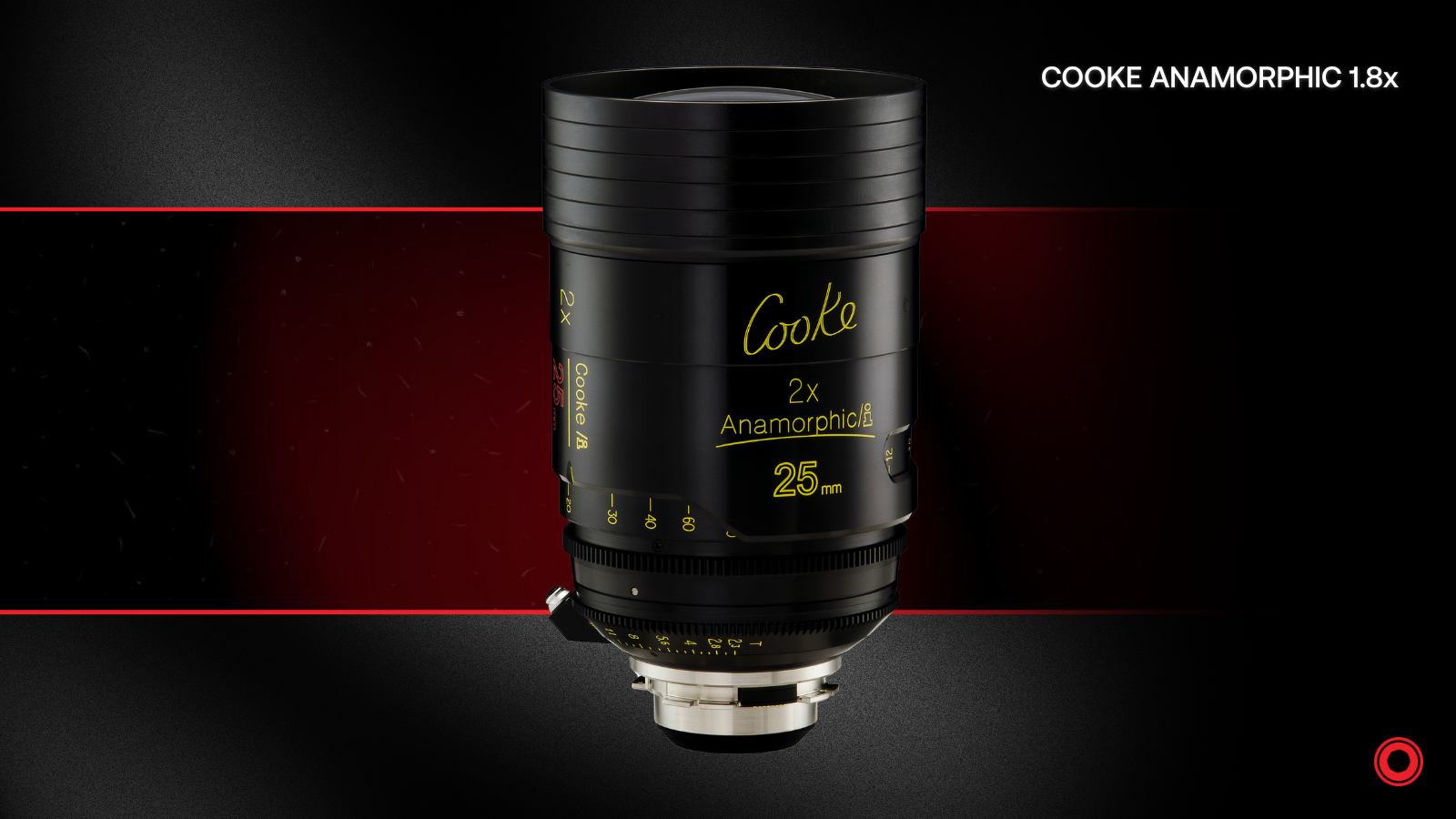
By the 2010s the rise of sharpness for VFX had grown a fatigue in the film industry. VFX was becoming more flexible with what lenses could be used, zoom lenses were becoming so optically sound that they were nearly imperceptible from their prime equivalents. Cinematographers grew hungry for more character in their glass. Anamorphic lenses made a huge comeback. Technological advancement was exploding at an exponential rate. During this boom, the Cooke Anamorphic 2x Zoom was born. Developed to accompany the Cooke Anamorphic 2x prime set, it was never intended to replace them but to extend their language. Cinematographers had embraced the primes for their balance of character and modern performance, and there was a growing need for a zoom that could move fluidly within that same visual space. With the technological prowess of the time, Cooke went to work on their expanding optical technology and was able to create a 35-140mm range anamorphic zoom. It preserves the warmth, dimensionality, and restraint of the Anamorphic 2x series while offering the flexibility of a zoom. It is not only a tremendous technical achievement; it is a philosophical continuation of the Cooke Look and innovative ideology.
Image Fidelity and Focus
Looking through the Cooke Anamorphic 2x Zoom, the immediate impression is continuity. This is not a zoom that shifts personality as it moves through its focal range. From the wide end to the telephoto, the image remains consistent in tone and character. Resolution is strong and dependable, supporting the demands of modern digital sensors, yet it avoids the brittle sharpness that can make images feel sterile. There is a softness woven into the detail, not as a limitation but as an intentional quality that keeps the image grounded. The optical design carries forward the front anamorphic approach used in the primes, preserving the classic characteristics of 2x anamorphic capture. Aberrations are carefully controlled, but not entirely erased. There is just enough imperfection to give the image texture. Skin tones are rendered with a gentle warmth that feels familiar and inviting. Highlights roll off smoothly, avoiding harsh clipping, while shadows retain depth without becoming overly dense.
Focus behavior is where the lens reveals its artistry. The transition from sharpness into blur is gradual and layered. There is no abrupt cutoff. Instead, the image seems to breathe, with subjects emerging naturally from their surroundings. This quality becomes especially powerful in motion. As the focal length changes, the relationship between subject and background evolves without disrupting the emotional continuity of the frame. The parfocal nature of the lens is immaculate. When paired with the Cooke Anamorphic 2x primes, the zoom integrates seamlessly. Cuts between the two feel invisible, as though they were captured on the same piece of glass. This harmony is what allows cinematographers to move between the primes and zoom without sacrificing visual cohesion.
Handling & Adaptability
Physically, the Cooke Anamorphic 2x Zoom is unapologetically substantial. It is a large and complex lens, and its size reflects the engineering required to achieve its performance. This is not a tool designed for minimalism. It is built for professional environments where reliability and precision take priority. The housing is robust and thoughtfully constructed, capable of withstanding the demands of production.
There are undeniable challenges that come with its scale. The weight requires proper support. It is a lens that asks for intention. Yet within that presence lies a remarkable level of control. The focus ring offers a long, precise rotation that allows for accurate and repeatable pulls. The zoom movement is smooth and consistent, maintaining parfocal performance even during dynamic reframing. For focus pullers, this reliability is invaluable. The lens behaves predictably, which translates directly into confidence on set.
Ergonomically, the design prioritizes consistency with the rest of the Cooke ecosystem. Front diameters and gear placements align with the primes, simplifying lens changes and accessory setups. Cooke’s /i technology integration provides metadata that supports modern workflows, from visual effects to color grading – a huge factor that significantly smooths post-production workflows especially when working with anamorphic lenses. What the lens sacrifices in compactness, it returns in flexibility. It allows cinematographers to capture moments that would otherwise require multiple setups, all while maintaining the integrity of the image. In practice, that flexibility often outweighs the physical demands.
Image Circle
The story of the image circle begins with the origins of 35mm film itself. Initially designed for still photography, 35mm film used a horizontal frame measuring 36mm by 24mm. When adapted for motion pictures, the film was reoriented vertically, creating a smaller usable frame that became the Academy standard. Over time, filmmakers sought ways to maximize the negative area, leading to the development of Super 35. By utilizing more of the film strip and rethinking how the image was captured, S35 achieved a diagonal image circle of approximately 31.1mm. Anamorphic lenses provided another option for creating a wider image. Rather than increasing the size of the capture medium, anamorphic glass expands the field of view by compressing it horizontally. The result was both efficient and expressive, combining technical practicality with a distinctive aesthetic. To fully cover S35mm, a lens must project an image circle of at least 31.1mm diagonally. The Cooke Anamorphic Zoom extends beyond this requirement, offering an image circle of approximately 33.5mm. This ensures full coverage with room for stability across the frame.
Flare and Bokeh
Light does not simply pass through the Cooke Anamorphic 2x Zoom. It interacts with it. When bright sources enter the frame, horizontal streaks stretch across the image with a quiet elegance. These flares are not overly aggressive. They tend to carry a soft, neutral tone with a subtle warmth, echoing Cooke’s color philosophy. There is a sense of restraint in how they appear. They enhance rather than dominate. Internal reflections are carefully controlled, allowing the lens to maintain contrast even in challenging lighting conditions. When flare does occur, it feels intentional, as though the lens is responding to the light rather than being overwhelmed by it. This predictability gives cinematographers the ability to shape flare as a compositional element, using it to guide the viewer’s eye or to add atmosphere to a scene.
Bokeh carries the unmistakable signature of 2x anamorphic compression. Out of focus highlights stretch into vertical ovals, their shape shifting subtly as they move across the frame. In the center, they appear smooth and cohesive, with soft edges that give them a creamy texture. Toward the edges, they begin to elongate and tilt, introducing a gentle sense of motion. This transformation turns simple points of light into expressive forms. Cooke’s approach is unique in their careful balance between character and control. The bokeh is distinctive, but it never feels chaotic. It supports the image rather than distracting from it. The result is an image that feels dimensional and alive, where light and shape work together to tell the story.
This lens is available for rent at Cine Visuals. For inquiries or testing appointments email info@cinevisuals.com or call (323) 244-2552.